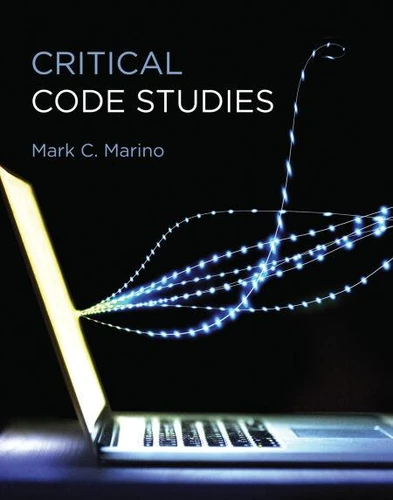
Critical Code Studies
Par :Formats :
Disponible dans votre compte client Decitre ou Furet du Nord dès validation de votre commande. Le format ePub protégé est :
- Compatible avec une lecture sur My Vivlio (smartphone, tablette, ordinateur)
- Compatible avec une lecture sur liseuses Vivlio
- Pour les liseuses autres que Vivlio, vous devez utiliser le logiciel Adobe Digital Edition. Non compatible avec la lecture sur les liseuses Kindle, Remarkable et Sony
- Non compatible avec un achat hors France métropolitaine
 , qui est-ce ?
Notre partenaire de plateforme de lecture numérique où vous retrouverez l'ensemble de vos ebooks gratuitement
Pour en savoir plus sur nos ebooks, consultez notre aide en ligne ici
C'est si simple ! Lisez votre ebook avec l'app Vivlio sur votre tablette, mobile ou ordinateur :

- Nombre de pages288
- FormatePub
- ISBN978-0-262-35743-2
- EAN9780262357432
- Date de parution10/03/2020
- Protection num.Adobe DRM
- Taille777 Ko
- Infos supplémentairesepub
- ÉditeurThe MIT Press
Résumé
An argument that we must read code for more than what it does-we must consider what it means. Computer source code has become part of popular discourse. Code is read not only by programmers but by lawyers, artists, pundits, reporters, political activists, and literary scholars; it is used in political debate, works of art, popular entertainment, and historical accounts. In this book, Mark Marino argues that code means more than merely what it does; we must also consider what it means.
We need to learn to read code critically. Marino presents a series of case studies-ranging from the Climategate scandal to a hactivist art project on the US-Mexico border-as lessons in critical code reading. Marino shows how, in the process of its circulation, the meaning of code changes beyond its functional role to include connotations and implications, opening it up to interpretation and inference-and misinterpretation and reappropriation.
The Climategate controversy, for example, stemmed from a misreading of a bit of placeholder code as a "smoking gun" that supposedly proved fabrication of climate data. A poetry generator created by Nick Montfort was remixed and reimagined by other poets, and subject to literary interpretation. Each case study begins by presenting a small and self-contained passage of code-by coders as disparate as programming pioneer Grace Hopper and philosopher Friedrich Kittler-and an accessible explanation of its context and functioning.
Marino then explores its extra-functional significance, demonstrating a variety of interpretive approaches.
We need to learn to read code critically. Marino presents a series of case studies-ranging from the Climategate scandal to a hactivist art project on the US-Mexico border-as lessons in critical code reading. Marino shows how, in the process of its circulation, the meaning of code changes beyond its functional role to include connotations and implications, opening it up to interpretation and inference-and misinterpretation and reappropriation.
The Climategate controversy, for example, stemmed from a misreading of a bit of placeholder code as a "smoking gun" that supposedly proved fabrication of climate data. A poetry generator created by Nick Montfort was remixed and reimagined by other poets, and subject to literary interpretation. Each case study begins by presenting a small and self-contained passage of code-by coders as disparate as programming pioneer Grace Hopper and philosopher Friedrich Kittler-and an accessible explanation of its context and functioning.
Marino then explores its extra-functional significance, demonstrating a variety of interpretive approaches.