SOLDES
Jusqu'à -70% sur une sélection d'articles*

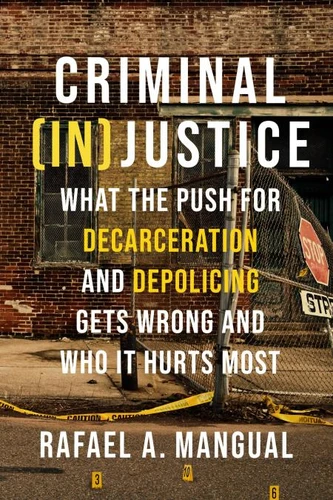
Criminal (In)Justice. What the Push for Decarceration and Depolicing Gets Wrong and Who It Hurts Most
Par :Formats :
Disponible dans votre compte client Decitre ou Furet du Nord dès validation de votre commande. Le format ePub protégé est :
- Compatible avec une lecture sur My Vivlio (smartphone, tablette, ordinateur)
- Compatible avec une lecture sur liseuses Vivlio
- Pour les liseuses autres que Vivlio, vous devez utiliser le logiciel Adobe Digital Edition. Non compatible avec la lecture sur les liseuses Kindle, Remarkable et Sony
- Non compatible avec un achat hors France métropolitaine
 , qui est-ce ?
Notre partenaire de plateforme de lecture numérique où vous retrouverez l'ensemble de vos ebooks gratuitement
Pour en savoir plus sur nos ebooks, consultez notre aide en ligne ici
C'est si simple ! Lisez votre ebook avec l'app Vivlio sur votre tablette, mobile ou ordinateur :

- Nombre de pages304
- FormatePub
- ISBN978-1-5460-0153-9
- EAN9781546001539
- Date de parution25/07/2022
- Protection num.Adobe DRM
- Infos supplémentairesepub
- ÉditeurCenter Street
Résumé
In his impassioned-yet-measured book, Rafael A. Mangual offers an incisive critique of America's increasingly radical criminal justice reform movement, and makes a convincing case against the pursuit of "justice" through mass-decarceration and depolicing. After a summer of violent protests in 2020-sparked by the deaths of George Floyd, Breonna Taylor, and Rayshard Brooks-a dangerously false narrative gained mainstream acceptance: Criminal justice in the United States is overly punitive and racially oppressive.
But, the harshest and loudest condemnations of incarceration, policing, and prosecution are often shallow and at odds with the available data. And the significant harms caused by this false narrative are borne by those who can least afford them: black and brown people who are disproportionately the victims of serious crimes. In Criminal (In)Justice, Rafael A. Mangual offers a more balanced understanding of American criminal justice, and cautions against discarding traditional crime control measures.
A powerful combination of research, data-driven policy journalism, and the author's lived experiences, this book explains what many reform advocates get wrong, and illustrates how the misguided commitment to leniency places America's most vulnerable communities at risk. The stakes of this moment are incredibly high. Ongoing debates over criminal justice reform have the potential to transform our society for a generation-for better or for worse.
Grappling with the data-and the sometimes harsh realities they reflect-is the surest way to minimize the all-too-common injustices plaguing neighborhoods that can least afford them.
But, the harshest and loudest condemnations of incarceration, policing, and prosecution are often shallow and at odds with the available data. And the significant harms caused by this false narrative are borne by those who can least afford them: black and brown people who are disproportionately the victims of serious crimes. In Criminal (In)Justice, Rafael A. Mangual offers a more balanced understanding of American criminal justice, and cautions against discarding traditional crime control measures.
A powerful combination of research, data-driven policy journalism, and the author's lived experiences, this book explains what many reform advocates get wrong, and illustrates how the misguided commitment to leniency places America's most vulnerable communities at risk. The stakes of this moment are incredibly high. Ongoing debates over criminal justice reform have the potential to transform our society for a generation-for better or for worse.
Grappling with the data-and the sometimes harsh realities they reflect-is the surest way to minimize the all-too-common injustices plaguing neighborhoods that can least afford them.