
Nouveauté
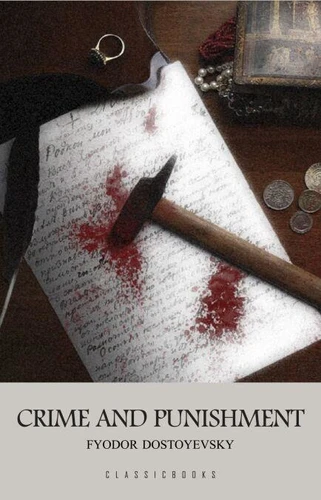
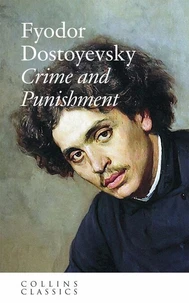
Crime and Punishment
Par :Formats :
Disponible dans votre compte client Decitre ou Furet du Nord dès validation de votre commande. Le format ePub est :
- Compatible avec une lecture sur My Vivlio (smartphone, tablette, ordinateur)
- Compatible avec une lecture sur liseuses Vivlio
- Pour les liseuses autres que Vivlio, vous devez utiliser le logiciel Adobe Digital Edition. Non compatible avec la lecture sur les liseuses Kindle, Remarkable et Sony
 , qui est-ce ?
Notre partenaire de plateforme de lecture numérique où vous retrouverez l'ensemble de vos ebooks gratuitement
Pour en savoir plus sur nos ebooks, consultez notre aide en ligne ici
C'est si simple ! Lisez votre ebook avec l'app Vivlio sur votre tablette, mobile ou ordinateur :

- FormatePub
- ISBN978-989-562-126-2
- EAN9789895621262
- Date de parution17/06/2026
- Protection num.pas de protection
- Taille3 Mo
- Infos supplémentairesepub
- ÉditeurClassicBooks by KTHTK
Résumé
Through the story of the brilliant but conflicted young Raskolnikov and the murder he commits, Fyodor Dostoyevsky explores the theme of redemption through suffering. "Crime and Punishment" put Dostoyevsky at the forefront of Russian writers when it appeared in 1866 and is now one of the most famous and influential novels in world literature.
The poverty-stricken Raskolnikov, a talented student, devises a theory about extraordinary men being above the law, since in their brilliance they think "new thoughts" and so contribute to society.
He then sets out to prove his theory by murdering a vile, cynical old pawnbroker and her sister. The act brings Raskolnikov into contact with his own buried conscience and with two characters - the deeply religious Sonia, who has endured great suffering, and Porfiry, the intelligent and discerning official who is charged with investigating the murder - both of whom compel Raskolnikov to feel the split in his nature.
Dostoyevsky provides readers with a suspenseful, penetrating psychological analysis that goes beyond the crime - which in the course of the novel demands drastic punishment - to reveal something about the human condition: The more we intellectualize, the more imprisoned we become.
He then sets out to prove his theory by murdering a vile, cynical old pawnbroker and her sister. The act brings Raskolnikov into contact with his own buried conscience and with two characters - the deeply religious Sonia, who has endured great suffering, and Porfiry, the intelligent and discerning official who is charged with investigating the murder - both of whom compel Raskolnikov to feel the split in his nature.
Dostoyevsky provides readers with a suspenseful, penetrating psychological analysis that goes beyond the crime - which in the course of the novel demands drastic punishment - to reveal something about the human condition: The more we intellectualize, the more imprisoned we become.
A propos de Fyodor Dostoyevsky
1,99 €
The Idiot
E-book
0,99 €
0,99 €

1,99 €
The Brothers Karamazov
E-book
0,99 €
Crime and Punishment
E-book
3,49 €
3,25 €
9,99 €
El crimen y el castigo
E-book
4,99 €
Der Doppelgänger
E-book
9,99 €
Der Großinquisitor
E-book
9,99 €
9,99 €