
Dr. theol. Dietrich-Alex Koch ist Professor em. für Neues Testament an der Evangelisch-Theologischen Fakultät der Westfälischen Wilhelms-Universität Münster.
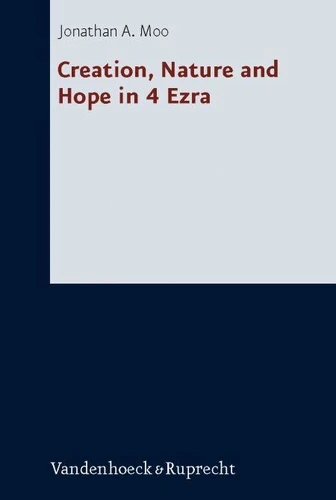
Creation, Nature and Hope in 4 Ezra
Par : ,Formats :
Disponible dans votre compte client Decitre ou Furet du Nord dès validation de votre commande. Le format PDF est :
- Compatible avec une lecture sur My Vivlio (smartphone, tablette, ordinateur)
- Compatible avec une lecture sur liseuses Vivlio
- Pour les liseuses autres que Vivlio, vous devez utiliser le logiciel Adobe Digital Edition. Non compatible avec la lecture sur les liseuses Kindle, Remarkable et Sony
 , qui est-ce ?
Notre partenaire de plateforme de lecture numérique où vous retrouverez l'ensemble de vos ebooks gratuitement
Pour en savoir plus sur nos ebooks, consultez notre aide en ligne ici
C'est si simple ! Lisez votre ebook avec l'app Vivlio sur votre tablette, mobile ou ordinateur :

- Nombre de pages206
- FormatPDF
- ISBN978-3-647-53103-8
- EAN9783647531038
- Date de parution18/05/2011
- Protection num.pas de protection
- Taille1 Mo
- Infos supplémentairespdf
- ÉditeurVandenhoeck & Ruprecht
Résumé
This exegetical study of creation and nature in 4 Ezra argues that this first-century Jewish apocalypse's profound pessimism concerning humankind and the present age is matched by a surprisingly robust belief in the goodness of the created order. 4 Ezra presents the natural world as standing with God over and against corrupt humankind, envisions substantial elements of continuity between the ages and hints that those parts of the earth that remain unsullied by humankind still witness to God's sovereignty, love and justice and even serve as material pointers to the new creation.
This study calls into question the persistent assumption that apocalypticism and the 'apocalyptic eschatology' of the historical apocalypses in particular necessarily entails a profound dualism. Emerging as it does from an experience of historical disaster and unresolved questions of theodicy, 4 Ezra especially is often considered an apocalypse in which the doctrine of the two ages has been radicalised to the extent that creation, history and life in this world have lost their meaning or significance.
The results of this study, however, indicate that while 4 Ezra considers the world of humankind to be corrupted and corrupting, in the natural world the creator's sovereignty is not so obscured, and there his original intentions for creation can still be perceived. This study provides a fresh reading of 4 Ezra that takes seriously the book's unity and coherence. Its conclusions suggest that it may be best to abandon the label 'apocalyptic eschatology' given its potential mask the interesting complexities and mix of continuity and discontinuity that attend the portrayal of creation, nature and hope in an apocalypse like 4 Ezra.
This study calls into question the persistent assumption that apocalypticism and the 'apocalyptic eschatology' of the historical apocalypses in particular necessarily entails a profound dualism. Emerging as it does from an experience of historical disaster and unresolved questions of theodicy, 4 Ezra especially is often considered an apocalypse in which the doctrine of the two ages has been radicalised to the extent that creation, history and life in this world have lost their meaning or significance.
The results of this study, however, indicate that while 4 Ezra considers the world of humankind to be corrupted and corrupting, in the natural world the creator's sovereignty is not so obscured, and there his original intentions for creation can still be perceived. This study provides a fresh reading of 4 Ezra that takes seriously the book's unity and coherence. Its conclusions suggest that it may be best to abandon the label 'apocalyptic eschatology' given its potential mask the interesting complexities and mix of continuity and discontinuity that attend the portrayal of creation, nature and hope in an apocalypse like 4 Ezra.