
Author
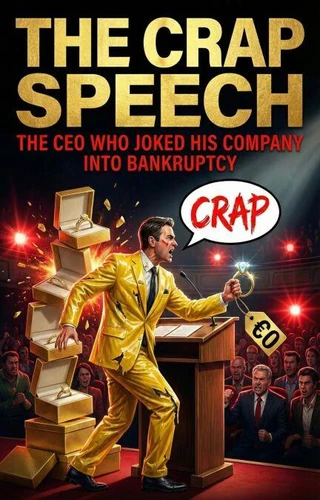
Crap Speech. The CEO Who Joked His Company into Bankruptcy
Par :Formats :
Disponible dans votre compte client Decitre ou Furet du Nord dès validation de votre commande. Le format ePub est :
- Compatible avec une lecture sur My Vivlio (smartphone, tablette, ordinateur)
- Compatible avec une lecture sur liseuses Vivlio
- Pour les liseuses autres que Vivlio, vous devez utiliser le logiciel Adobe Digital Edition. Non compatible avec la lecture sur les liseuses Kindle, Remarkable et Sony
 , qui est-ce ?
Notre partenaire de plateforme de lecture numérique où vous retrouverez l'ensemble de vos ebooks gratuitement
Pour en savoir plus sur nos ebooks, consultez notre aide en ligne ici
C'est si simple ! Lisez votre ebook avec l'app Vivlio sur votre tablette, mobile ou ordinateur :

- Nombre de pages201
- FormatePub
- ISBN978-3-565-25692-1
- EAN9783565256921
- Date de parution18/02/2026
- Protection num.pas de protection
- Taille740 Ko
- Infos supplémentairesepub
- ÉditeurEmphaloz Publishing House
Résumé
On April 23, 1991, Gerald Ratner was the CEO of the world's most successful jewelry chain. He was the golden boy of British business, turning a small family firm into a billion-pound empire. Then, he stood up at a corporate conference and made a joke. When asked how he sold a sherry decanter for such a low price, he replied: "Because it's total crap." He went on to say his earrings were cheaper than a prawn sandwich but wouldn't last as long.
"The Crap Speech" analyzes the most expensive joke in corporate history.
Overnight, the value of the Ratners Group plummeted by £500 million. Customers felt mocked, shops were boycotted, and "Doing a Ratner" became a phrase for self-inflicted business suicide. This book is a case study on the fragility of brand reputation and the danger of hubris. It explores the fine line between authentic humor and insulting your customer base. It follows Ratner's painful journey from tycoon to pariah, his decades in the wilderness, and his eventual redemption as an entrepreneur who learned the hard way that honesty isn't always the best policy-at least not when you are selling illusions.
Overnight, the value of the Ratners Group plummeted by £500 million. Customers felt mocked, shops were boycotted, and "Doing a Ratner" became a phrase for self-inflicted business suicide. This book is a case study on the fragility of brand reputation and the danger of hubris. It explores the fine line between authentic humor and insulting your customer base. It follows Ratner's painful journey from tycoon to pariah, his decades in the wilderness, and his eventual redemption as an entrepreneur who learned the hard way that honesty isn't always the best policy-at least not when you are selling illusions.
A propos de James Thornton

The Coldest Game
E-book
2,99 €