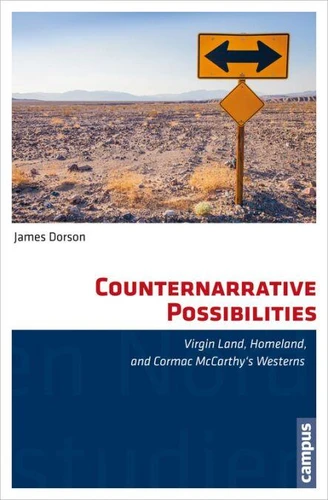
Counternarrative Possibilities. Virgin Land, Homeland, and Cormac McCarthy's Westerns
Par :Formats :
Disponible dans votre compte client Decitre ou Furet du Nord dès validation de votre commande. Le format PDF est :
- Compatible avec une lecture sur My Vivlio (smartphone, tablette, ordinateur)
- Compatible avec une lecture sur liseuses Vivlio
- Pour les liseuses autres que Vivlio, vous devez utiliser le logiciel Adobe Digital Edition. Non compatible avec la lecture sur les liseuses Kindle, Remarkable et Sony
 , qui est-ce ?
Notre partenaire de plateforme de lecture numérique où vous retrouverez l'ensemble de vos ebooks gratuitement
Pour en savoir plus sur nos ebooks, consultez notre aide en ligne ici
C'est si simple ! Lisez votre ebook avec l'app Vivlio sur votre tablette, mobile ou ordinateur :

- Nombre de pages308
- FormatPDF
- ISBN978-3-593-43383-7
- EAN9783593433837
- Date de parution09/06/2016
- Protection num.Digital Watermarking
- Taille14 Mo
- Infos supplémentairespdf
- ÉditeurCampus
Résumé
Counternarrative Possibilities reads Cormac McCarthy's Westerns against the backdrop of two formative tropes in American mythology: virgin land (from the 1950s) and homeland (after '9/11' ). Looking at McCarthy's Westerns in the context of American Studies, James Dorson shows how his novels counter the national narratives underlying these tropes and reinvest them with new, potentially transformative meaning.
Departing from prevailing accounts of McCarthy that place him in relation to his literary antecedents, Counternarrative Possibilities takes a forwardlooking approach that reads McCarthy's work as a key influence on millennial fiction. Weaving together disciplinary history with longstanding debates over the relationship between aesthetics and politics, this book is at once an exploration of the limits of ideology critique in the twenty-first century and an original reconsideration of McCarthy's work 'after postmodernism'.
Departing from prevailing accounts of McCarthy that place him in relation to his literary antecedents, Counternarrative Possibilities takes a forwardlooking approach that reads McCarthy's work as a key influence on millennial fiction. Weaving together disciplinary history with longstanding debates over the relationship between aesthetics and politics, this book is at once an exploration of the limits of ideology critique in the twenty-first century and an original reconsideration of McCarthy's work 'after postmodernism'.