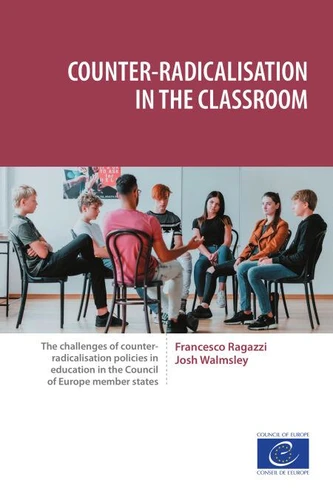
Counter-radicalisation in the classroom. The challenges of counter-radicalisation policies in education in the Council of Europe member states
Par : ,Formats :
Disponible dans votre compte client Decitre ou Furet du Nord dès validation de votre commande. Le format ePub est :
- Compatible avec une lecture sur My Vivlio (smartphone, tablette, ordinateur)
- Compatible avec une lecture sur liseuses Vivlio
- Pour les liseuses autres que Vivlio, vous devez utiliser le logiciel Adobe Digital Edition. Non compatible avec la lecture sur les liseuses Kindle, Remarkable et Sony
 , qui est-ce ?
Notre partenaire de plateforme de lecture numérique où vous retrouverez l'ensemble de vos ebooks gratuitement
Pour en savoir plus sur nos ebooks, consultez notre aide en ligne ici
C'est si simple ! Lisez votre ebook avec l'app Vivlio sur votre tablette, mobile ou ordinateur :

- FormatePub
- ISBN978-92-871-9032-1
- EAN9789287190321
- Date de parution28/01/2021
- Protection num.pas de protection
- Infos supplémentairesepub
- ÉditeurCouncil of Europe
Résumé
Insights from eight grass-roots projects in Council of Europe member states to address the challenges of policies to counter-radicalisation in education
This report offers an assessment of the effects of counter-radicalisation policies in the education sector, through the empirical analysis of eight grass-roots projects located in schools across the member states of the Council of Europe (Belgium, Bosnia and Herzegovina, Croatia, Germany, Hungary, Norway and the United Kingdom).
It provides a detailed insight into how such policies are experienced in practice. The report covers three main areas. First, it offers an analysis of the legislative and political context that led to the development of counter-radicalisation policies, as well as their contestation. Second, based on qualitative interviews and focus groups with project leaders, students, teachers, educators and school managers, it provides a detailed account of the very heterogeneous type of practices encapsulated by the term "counter-radicalisation".
Finally, it shows that while some practices are in line with principles of human rights education and education for democratic citizenship, others risk undermining fundamental rights and the autonomy of education. The report concludes with some key recommendations to the Council of Europe on how to overcome these challenges.
It provides a detailed insight into how such policies are experienced in practice. The report covers three main areas. First, it offers an analysis of the legislative and political context that led to the development of counter-radicalisation policies, as well as their contestation. Second, based on qualitative interviews and focus groups with project leaders, students, teachers, educators and school managers, it provides a detailed account of the very heterogeneous type of practices encapsulated by the term "counter-radicalisation".
Finally, it shows that while some practices are in line with principles of human rights education and education for democratic citizenship, others risk undermining fundamental rights and the autonomy of education. The report concludes with some key recommendations to the Council of Europe on how to overcome these challenges.