
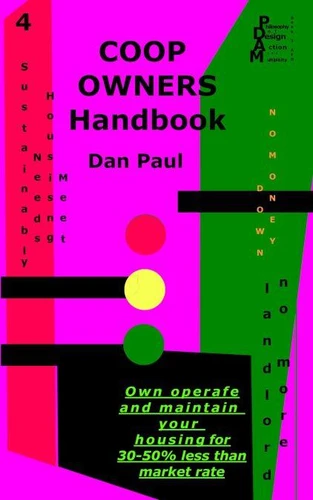
Coop Owners Manual. Philosophy of Action, Design and Multiplicity, #4
Par :Formats :
Disponible dans votre compte client Decitre ou Furet du Nord dès validation de votre commande. Le format ePub est :
- Compatible avec une lecture sur My Vivlio (smartphone, tablette, ordinateur)
- Compatible avec une lecture sur liseuses Vivlio
- Pour les liseuses autres que Vivlio, vous devez utiliser le logiciel Adobe Digital Edition. Non compatible avec la lecture sur les liseuses Kindle, Remarkable et Sony
 , qui est-ce ?
Notre partenaire de plateforme de lecture numérique où vous retrouverez l'ensemble de vos ebooks gratuitement
Pour en savoir plus sur nos ebooks, consultez notre aide en ligne ici
C'est si simple ! Lisez votre ebook avec l'app Vivlio sur votre tablette, mobile ou ordinateur :

- FormatePub
- ISBN978-1-953104-06-9
- EAN9781953104069
- Date de parution19/12/2025
- Protection num.pas de protection
- Infos supplémentairesepub
- ÉditeurDan Paul
Résumé
The co-op owners manual describes how people own, manage, and operate housing to meet needs locally and sustainably in the community, usually for 30-50% less than market-rate housing. Members in a co-op meet weekly to govern their housing. They decide what must be done to keep the building running efficiently. With a work job system, they assign duties to each person to work 3 to 5 hours per week to make housing.
Work jobs include cleaning, cooking, maintenance, finance, governance, and coordinating membership. Each person works on one job, pays monthly for housing and food, and comes to a weekly meeting. Members are usually not related to each other, but could be. Often, it's a left-leaning culture, but the system could work with any group of people. The cost of co-op housing is usually 30 to 50% less than market-rate housing with organic food.
How can this be possible? In meetings, people use their combined mental power to manage the building most efficiently. The group benefits when people combine their skills to eliminate the landlord and reduce other costs by doing the work themselves.
Work jobs include cleaning, cooking, maintenance, finance, governance, and coordinating membership. Each person works on one job, pays monthly for housing and food, and comes to a weekly meeting. Members are usually not related to each other, but could be. Often, it's a left-leaning culture, but the system could work with any group of people. The cost of co-op housing is usually 30 to 50% less than market-rate housing with organic food.
How can this be possible? In meetings, people use their combined mental power to manage the building most efficiently. The group benefits when people combine their skills to eliminate the landlord and reduce other costs by doing the work themselves.
A propos de Dan Paul


The Velvet Conspiracy
E-book
3,99 €