SOLDES
Jusqu'à -70% sur une sélection d'articles*

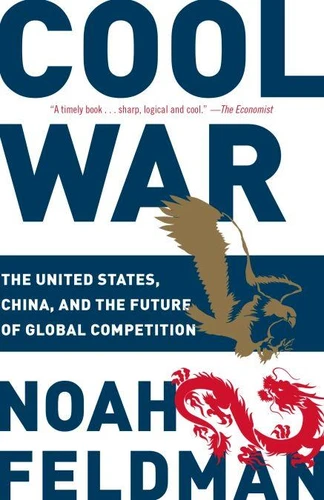
Cool War. The United States, China, and the Future of Global Competition
Par :Formats :
Disponible dans votre compte client Decitre ou Furet du Nord dès validation de votre commande. Le format ePub protégé est :
- Compatible avec une lecture sur My Vivlio (smartphone, tablette, ordinateur)
- Compatible avec une lecture sur liseuses Vivlio
- Pour les liseuses autres que Vivlio, vous devez utiliser le logiciel Adobe Digital Edition. Non compatible avec la lecture sur les liseuses Kindle, Remarkable et Sony
- Non compatible avec un achat hors France métropolitaine
 , qui est-ce ?
Notre partenaire de plateforme de lecture numérique où vous retrouverez l'ensemble de vos ebooks gratuitement
Pour en savoir plus sur nos ebooks, consultez notre aide en ligne ici
C'est si simple ! Lisez votre ebook avec l'app Vivlio sur votre tablette, mobile ou ordinateur :

- Nombre de pages224
- FormatePub
- ISBN978-0-679-64383-8
- EAN9780679643838
- Date de parution21/05/2013
- Protection num.Adobe DRM
- Taille2 Mo
- Infos supplémentairesepub
- ÉditeurRandom House
Résumé
A bold and thought-provoking look at the future of U. S.-China relations, and how their coming power struggle will reshape the competitive playing field for nations around the world The Cold War seemingly ended in a decisive victory for the West. But now, Noah Feldman argues, we are entering an era of renewed global struggle: the era of Cool War. Just as the Cold War matched the planet's reigning superpowers in a contest for geopolitical supremacy, so this new age will pit the United States against a rising China in a contest for dominance, alliances, and resources.
Already visible in Asia, the conflict will extend to the Middle East (U. S.-backed Israel versus Chinese-backed Iran), Africa, and beyond. Yet this Cool War differs fundamentally from the zero-sum showdowns of the past: The world's major power and its leading challenger are economically interdependent to an unprecedented degree. Exports to the U. S. account for nearly a quarter of Chinese trade, while the Chinese government holds 8 percent of America's outstanding debt.
This positive-sum interdependence has profound implications for nations, corporations, and international institutions. It makes what looked to be a classic contest between two great powers into something much more complex, contradictory, and badly in need of the shrewd and carefully reasoned analysis that Feldman provides. To understand the looming competition with China, we must understand the incentives that drive Chinese policy.
Feldman offers an arresting take on that country's secretive hierarchy, proposing that the hereditary "princelings" who reap the benefits of the complicated Chinese political system are actually in partnership with the meritocrats who keep the system full of fresh talent and the reformers who are trying to root out corruption and foster government accountability. He provides a clear-eyed analysis of the years ahead, showing how China's rise presents opportunities as well as risks.
Robust competition could make the U. S. leaner, smarter, and more pragmatic, and could drive China to greater respect for human rights. Alternatively, disputes over trade, territory, or human rights could jeopardize the global economic equilibrium-or provoke a catastrophic "hot war" that neither country wants. The U. S. and China may be divided by political culture and belief, but they are also bound together by mutual self-interest.
Cool War makes the case for competitive cooperation as the only way forward that can preserve the peace and make winners out of both sides. Praise for Cool War "A timely book .
Already visible in Asia, the conflict will extend to the Middle East (U. S.-backed Israel versus Chinese-backed Iran), Africa, and beyond. Yet this Cool War differs fundamentally from the zero-sum showdowns of the past: The world's major power and its leading challenger are economically interdependent to an unprecedented degree. Exports to the U. S. account for nearly a quarter of Chinese trade, while the Chinese government holds 8 percent of America's outstanding debt.
This positive-sum interdependence has profound implications for nations, corporations, and international institutions. It makes what looked to be a classic contest between two great powers into something much more complex, contradictory, and badly in need of the shrewd and carefully reasoned analysis that Feldman provides. To understand the looming competition with China, we must understand the incentives that drive Chinese policy.
Feldman offers an arresting take on that country's secretive hierarchy, proposing that the hereditary "princelings" who reap the benefits of the complicated Chinese political system are actually in partnership with the meritocrats who keep the system full of fresh talent and the reformers who are trying to root out corruption and foster government accountability. He provides a clear-eyed analysis of the years ahead, showing how China's rise presents opportunities as well as risks.
Robust competition could make the U. S. leaner, smarter, and more pragmatic, and could drive China to greater respect for human rights. Alternatively, disputes over trade, territory, or human rights could jeopardize the global economic equilibrium-or provoke a catastrophic "hot war" that neither country wants. The U. S. and China may be divided by political culture and belief, but they are also bound together by mutual self-interest.
Cool War makes the case for competitive cooperation as the only way forward that can preserve the peace and make winners out of both sides. Praise for Cool War "A timely book .