SOLDES
Jusqu'à -70% sur une sélection d'articles*

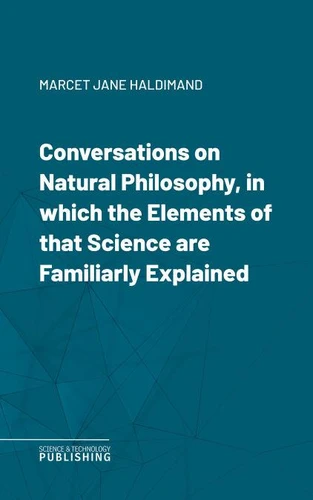
Conversations on Natural Philosophy, in which the Elements of that Science are Familiarly Explained
Par : ,Formats :
Disponible dans votre compte client Decitre ou Furet du Nord dès validation de votre commande. Le format ePub est :
- Compatible avec une lecture sur My Vivlio (smartphone, tablette, ordinateur)
- Compatible avec une lecture sur liseuses Vivlio
- Pour les liseuses autres que Vivlio, vous devez utiliser le logiciel Adobe Digital Edition. Non compatible avec la lecture sur les liseuses Kindle, Remarkable et Sony
 , qui est-ce ?
Notre partenaire de plateforme de lecture numérique où vous retrouverez l'ensemble de vos ebooks gratuitement
Pour en savoir plus sur nos ebooks, consultez notre aide en ligne ici
C'est si simple ! Lisez votre ebook avec l'app Vivlio sur votre tablette, mobile ou ordinateur :

- FormatePub
- ISBN978-2-5281-0761-4
- EAN9782528107614
- Date de parution01/09/2025
- Protection num.pas de protection
- Infos supplémentairesepub
- ÉditeurScience & Technology Publishing
Résumé
Conversations on Natural Philosophy, in which the Elements of that Science are Familiarly Explained is a foundational educational text first published in the early 19th century by Jane Haldimand Marcet. Designed as a series of engaging dialogues, the book presents the fundamental principles of natural philosophy-what we now call physics-in a manner accessible to young readers and those new to scientific study.
The narrative unfolds through conversations between Mrs. Bryan, a knowledgeable teacher, and her two eager pupils, Caroline and Emily. Through their questions and discussions, the book covers a wide range of topics, including the properties of matter, the laws of motion, gravity, simple machines, heat, light, sound, electricity, and magnetism. Marcet's approach is notable for its clarity and warmth, using everyday examples and analogies to demystify complex scientific concepts.
The conversational format encourages curiosity and critical thinking, making the material approachable and memorable. The book also includes numerous illustrations and experiments that readers can perform at home, further enhancing understanding and engagement. Conversations on Natural Philosophy played a significant role in popularizing science education, especially for women and young people, at a time when formal scientific instruction was often inaccessible to them.
Its influence extended to notable figures such as Michael Faraday, who credited the book with sparking his interest in science. Today, the book stands as a testament to the power of clear, inclusive science communication and remains a valuable resource for anyone interested in the history of science education or the foundational concepts of physics.
The narrative unfolds through conversations between Mrs. Bryan, a knowledgeable teacher, and her two eager pupils, Caroline and Emily. Through their questions and discussions, the book covers a wide range of topics, including the properties of matter, the laws of motion, gravity, simple machines, heat, light, sound, electricity, and magnetism. Marcet's approach is notable for its clarity and warmth, using everyday examples and analogies to demystify complex scientific concepts.
The conversational format encourages curiosity and critical thinking, making the material approachable and memorable. The book also includes numerous illustrations and experiments that readers can perform at home, further enhancing understanding and engagement. Conversations on Natural Philosophy played a significant role in popularizing science education, especially for women and young people, at a time when formal scientific instruction was often inaccessible to them.
Its influence extended to notable figures such as Michael Faraday, who credited the book with sparking his interest in science. Today, the book stands as a testament to the power of clear, inclusive science communication and remains a valuable resource for anyone interested in the history of science education or the foundational concepts of physics.