
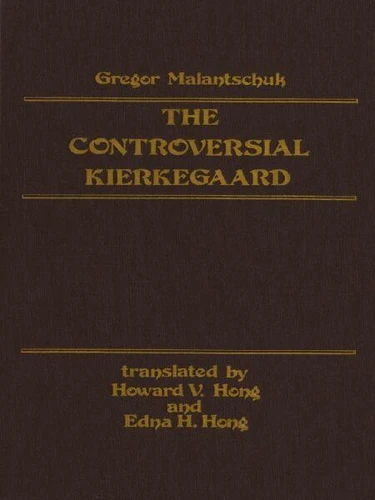
Controversial Kierkegaard
Par : , ,Formats :
Disponible dans votre compte client Decitre ou Furet du Nord dès validation de votre commande. Le format ePub est :
- Compatible avec une lecture sur My Vivlio (smartphone, tablette, ordinateur)
- Compatible avec une lecture sur liseuses Vivlio
- Pour les liseuses autres que Vivlio, vous devez utiliser le logiciel Adobe Digital Edition. Non compatible avec la lecture sur les liseuses Kindle, Remarkable et Sony
 , qui est-ce ?
Notre partenaire de plateforme de lecture numérique où vous retrouverez l'ensemble de vos ebooks gratuitement
Pour en savoir plus sur nos ebooks, consultez notre aide en ligne ici
C'est si simple ! Lisez votre ebook avec l'app Vivlio sur votre tablette, mobile ou ordinateur :

- Nombre de pages96
- FormatePub
- ISBN978-1-55458-738-4
- EAN9781554587384
- Date de parution30/10/2010
- Protection num.Digital Watermarking
- Taille358 Ko
- Infos supplémentairesepub
- ÉditeurWilfrid Laurier University Press
Résumé
A widespread misapprehension of Søren Kierkegaard is that his concern for the individual and the individual's relation to the divine excluded any significant attention to social and political problems. In this volume Gregor Malantschuk, before his death one of the world's foremost Kierkegaard scholars, demonstrates the social dimension of Kierkegaard's thought - the relation between the individual and the state, the distinctive and complementary character of man and woman, his possible acquaintance with Marxist thought.
The book shows Kierkegaard as an astute observer of the social and political situation of his time and underscores the differences between his presuppositions and those of the present day. The book is a translation of Den kontroversielle Kierkegaard together with two additional essays by Malantschuk.
The book shows Kierkegaard as an astute observer of the social and political situation of his time and underscores the differences between his presuppositions and those of the present day. The book is a translation of Den kontroversielle Kierkegaard together with two additional essays by Malantschuk.