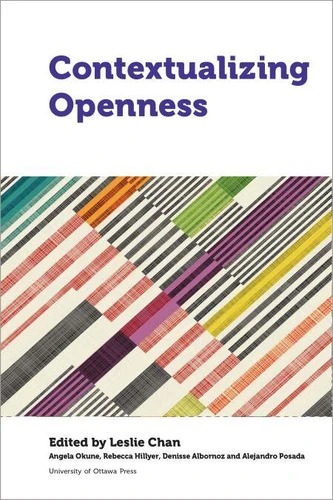
Contextualizing Openness. Situating Open Science
Par : , , , ,Formats :
Disponible dans votre compte client Decitre ou Furet du Nord dès validation de votre commande. Le format ePub est :
- Compatible avec une lecture sur My Vivlio (smartphone, tablette, ordinateur)
- Compatible avec une lecture sur liseuses Vivlio
- Pour les liseuses autres que Vivlio, vous devez utiliser le logiciel Adobe Digital Edition. Non compatible avec la lecture sur les liseuses Kindle, Remarkable et Sony
 , qui est-ce ?
Notre partenaire de plateforme de lecture numérique où vous retrouverez l'ensemble de vos ebooks gratuitement
Pour en savoir plus sur nos ebooks, consultez notre aide en ligne ici
C'est si simple ! Lisez votre ebook avec l'app Vivlio sur votre tablette, mobile ou ordinateur :

- Nombre de pages280
- FormatePub
- ISBN978-0-7766-2668-0
- EAN9780776626680
- Date de parution31/10/2019
- Protection num.pas de protection
- Taille5 Mo
- Infos supplémentairesepub
- ÉditeurUniversity of Ottawa Press
Résumé
Contextualizing Openness offers a fascinating look at Open Science and the democratization of knowledge in international development and social transformation with a focus on the Global South. This volume presents contributions from the twelve projects that form the Open and Collaborative Science in Development Network (OCSDNet) organized around four central themes: Defining Open Science in Development; Governing Open Science; Negotiating Open Science; and Expanding Open Science for Social Transformation.
The collective goal is to illustrate how the opportunities and challenges associated with openness vary across regions and, further, to identify the key differences that characterize the actors, institutions, as well as the infrastructure and governance of knowledge-based resources in highly diverse settings. To understand the movement toward Open Science and its impact on the thinking and practices that drive development, we must challenge the asymmetry of global knowledge production and of access to this knowledge.
Contextualizing Openness aims at stimulating further research and debate on how to collectively design a knowledge system that is open and equitable for all. Published in English.
The collective goal is to illustrate how the opportunities and challenges associated with openness vary across regions and, further, to identify the key differences that characterize the actors, institutions, as well as the infrastructure and governance of knowledge-based resources in highly diverse settings. To understand the movement toward Open Science and its impact on the thinking and practices that drive development, we must challenge the asymmetry of global knowledge production and of access to this knowledge.
Contextualizing Openness aims at stimulating further research and debate on how to collectively design a knowledge system that is open and equitable for all. Published in English.