SOLDES
Jusqu'à -70% sur une sélection d'articles*
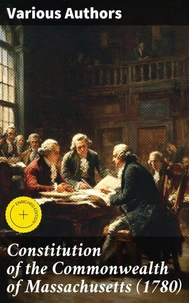
Constitution of the Commonwealth of Massachusetts (1780)
Par : , ,Formats :
Disponible dans votre compte client Decitre ou Furet du Nord dès validation de votre commande. Le format ePub est :
- Compatible avec une lecture sur My Vivlio (smartphone, tablette, ordinateur)
- Compatible avec une lecture sur liseuses Vivlio
- Pour les liseuses autres que Vivlio, vous devez utiliser le logiciel Adobe Digital Edition. Non compatible avec la lecture sur les liseuses Kindle, Remarkable et Sony
 , qui est-ce ?
Notre partenaire de plateforme de lecture numérique où vous retrouverez l'ensemble de vos ebooks gratuitement
Pour en savoir plus sur nos ebooks, consultez notre aide en ligne ici
C'est si simple ! Lisez votre ebook avec l'app Vivlio sur votre tablette, mobile ou ordinateur :

- Nombre de pages106
- FormatePub
- ISBN859-65--4772539-8
- EAN8596547725398
- Date de parution18/11/2023
- Protection num.Digital Watermarking
- Taille514 Ko
- Infos supplémentairesepub
- ÉditeurDIGICAT
Résumé
The 'Constitution of the Commonwealth of Massachusetts (1780)' collection is an exceptional compendium weaving together the seminal thoughts and governance ideals of the late 18th century. This anthology captures a pivotal moment in American history, guided by the enduring principles of democracy and republicanism. The text showcases a variety of literary compositions ranging from visionary political arguments to compelling philosophical expositions.
As a cornerstone document, the Massachusetts Constitution exemplifies the dynamic interplay between individual rights and collective governance, setting a precedent for future constitutional frameworks. Its pieces collectively reflect on liberty, justice, and governance, grounding them in a context of profound societal transformation. The accomplished architects of this compendium, Samuel Adams, John Adams, and James Bowdoin, are each renowned figures in their own right, contributing uniquely to this foundational text.
Their backgrounds, rich with revolutionary fervor and philosophical inquiry, embody the ideals of the Enlightenment and the burgeoning American identity. These contributors, instrumental in the evolution of democratic thought, present a unified yet diverse set of visions that converge to delineate civil liberty and governmental structure. By anchoring their discourse in a historical context marked by change and experimentation, they provide rich layers of insight into the ideological underpinnings of early American governance.
Readers interested in the formative stages of American political thought will find this anthology invaluable for its depth and breadth. It offers a remarkable opportunity to navigate the multifaceted perspectives of its contributors, allowing for a robust understanding of its enduring principles. The collection serves as a bridge across centuries, facilitating a dialogue on the enduring quest for a just society.
Embrace this volume to enrich your comprehension of the visions that shaped a nation, inspiring an ongoing discourse on the role and architecture of governance in human societies.
As a cornerstone document, the Massachusetts Constitution exemplifies the dynamic interplay between individual rights and collective governance, setting a precedent for future constitutional frameworks. Its pieces collectively reflect on liberty, justice, and governance, grounding them in a context of profound societal transformation. The accomplished architects of this compendium, Samuel Adams, John Adams, and James Bowdoin, are each renowned figures in their own right, contributing uniquely to this foundational text.
Their backgrounds, rich with revolutionary fervor and philosophical inquiry, embody the ideals of the Enlightenment and the burgeoning American identity. These contributors, instrumental in the evolution of democratic thought, present a unified yet diverse set of visions that converge to delineate civil liberty and governmental structure. By anchoring their discourse in a historical context marked by change and experimentation, they provide rich layers of insight into the ideological underpinnings of early American governance.
Readers interested in the formative stages of American political thought will find this anthology invaluable for its depth and breadth. It offers a remarkable opportunity to navigate the multifaceted perspectives of its contributors, allowing for a robust understanding of its enduring principles. The collection serves as a bridge across centuries, facilitating a dialogue on the enduring quest for a just society.
Embrace this volume to enrich your comprehension of the visions that shaped a nation, inspiring an ongoing discourse on the role and architecture of governance in human societies.