SOLDES
Jusqu'à -70% sur une sélection d'articles*

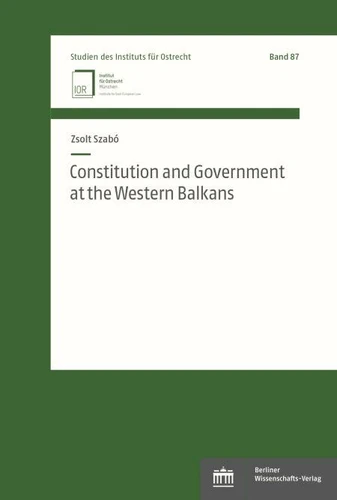
Constitution and Government at the Western Balkans
Par :Formats :
Disponible dans votre compte client Decitre ou Furet du Nord dès validation de votre commande. Le format PDF est :
- Compatible avec une lecture sur My Vivlio (smartphone, tablette, ordinateur)
- Compatible avec une lecture sur liseuses Vivlio
- Pour les liseuses autres que Vivlio, vous devez utiliser le logiciel Adobe Digital Edition. Non compatible avec la lecture sur les liseuses Kindle, Remarkable et Sony
 , qui est-ce ?
Notre partenaire de plateforme de lecture numérique où vous retrouverez l'ensemble de vos ebooks gratuitement
Pour en savoir plus sur nos ebooks, consultez notre aide en ligne ici
C'est si simple ! Lisez votre ebook avec l'app Vivlio sur votre tablette, mobile ou ordinateur :

- Nombre de pages216
- FormatPDF
- ISBN978-3-8305-5562-9
- EAN9783830555629
- Date de parution06/07/2023
- Protection num.Digital Watermarking
- Taille1 Mo
- Infos supplémentairespdf
- ÉditeurBWV
Résumé
The e-book describes and evaluates the status and functioning of the constitutional and governance systems of the Western Balkans countries (Albania, Bosnia and Herzegovina, Kosovo, Montenegro, Northern Macedonia, Serbia), with regard to their EU-accession. As it describes the main branches of government functions, it may also be used as a handbook, which also identifies the bottlenecks of governance (especially the sensitive ethnic power sharing and representation issues) and critically examines the rule of law aspects.
This comparative study covers all six countries of the region systematically, in terms of governance and rule of law. The e-book presents all major institutional fields of constitutional and administrative law: electoral system, ethnic issues, organisation of the state, separation of powers (legislative, executive, judiciary), administrative procedure, civil service, and constitutional adjudication.
This comparative study covers all six countries of the region systematically, in terms of governance and rule of law. The e-book presents all major institutional fields of constitutional and administrative law: electoral system, ethnic issues, organisation of the state, separation of powers (legislative, executive, judiciary), administrative procedure, civil service, and constitutional adjudication.