
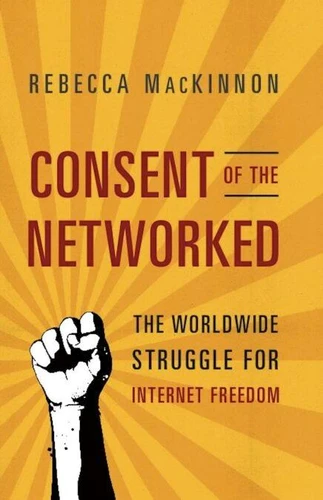
Consent of the Networked. The Worldwide Struggle For Internet Freedom
Par :Formats :
Disponible dans votre compte client Decitre ou Furet du Nord dès validation de votre commande. Le format ePub protégé est :
- Compatible avec une lecture sur My Vivlio (smartphone, tablette, ordinateur)
- Compatible avec une lecture sur liseuses Vivlio
- Pour les liseuses autres que Vivlio, vous devez utiliser le logiciel Adobe Digital Edition. Non compatible avec la lecture sur les liseuses Kindle, Remarkable et Sony
- Non compatible avec un achat hors France métropolitaine
 , qui est-ce ?
Notre partenaire de plateforme de lecture numérique où vous retrouverez l'ensemble de vos ebooks gratuitement
Pour en savoir plus sur nos ebooks, consultez notre aide en ligne ici
C'est si simple ! Lisez votre ebook avec l'app Vivlio sur votre tablette, mobile ou ordinateur :

- Nombre de pages320
- FormatePub
- ISBN978-0-465-02929-7
- EAN9780465029297
- Date de parution30/01/2012
- Protection num.Adobe DRM
- Infos supplémentairesepub
- ÉditeurBasic Books
Résumé
The Internet was going to liberate us, but in truth it has not. For every story about the web's empowering role in events such as the Arab Spring, there are many more about the quiet corrosion of civil liberties by companies and governments using the same digital technologies we have come to depend upon. In Consent of the Networked, journalist and Internet policy specialist Rebecca MacKinnon argues that it is time to fight for our rights before they are sold, legislated, programmed, and engineered away.
Every day, the corporate sovereigns of cyberspace (Google and Facebook, among others) make decisions that affect our physical freedom -- but without our consent. Yet the traditional solution to unaccountable corporate behavior -- government regulation -- cannot stop the abuse of digital power on its own, and sometimes even contributes to it. A clarion call to action, Consent of the Networked shows that it is time to stop arguing over whether the Internet empowers people, and address the urgent question of how technology should be governed to support the rights and liberties of users around the world.
Every day, the corporate sovereigns of cyberspace (Google and Facebook, among others) make decisions that affect our physical freedom -- but without our consent. Yet the traditional solution to unaccountable corporate behavior -- government regulation -- cannot stop the abuse of digital power on its own, and sometimes even contributes to it. A clarion call to action, Consent of the Networked shows that it is time to stop arguing over whether the Internet empowers people, and address the urgent question of how technology should be governed to support the rights and liberties of users around the world.