SOLDES
Jusqu'à -70% sur une sélection d'articles*

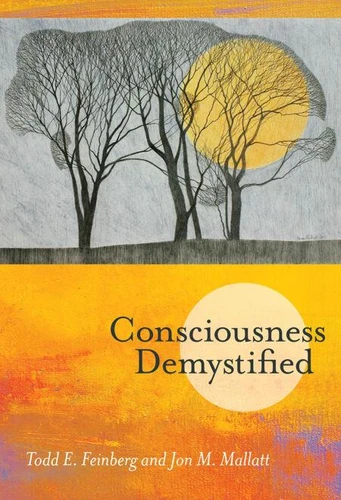
Consciousness Demystified
Par : ,Formats :
Disponible dans votre compte client Decitre ou Furet du Nord dès validation de votre commande. Le format ePub protégé est :
- Compatible avec une lecture sur My Vivlio (smartphone, tablette, ordinateur)
- Compatible avec une lecture sur liseuses Vivlio
- Pour les liseuses autres que Vivlio, vous devez utiliser le logiciel Adobe Digital Edition. Non compatible avec la lecture sur les liseuses Kindle, Remarkable et Sony
- Non compatible avec un achat hors France métropolitaine
 , qui est-ce ?
Notre partenaire de plateforme de lecture numérique où vous retrouverez l'ensemble de vos ebooks gratuitement
Pour en savoir plus sur nos ebooks, consultez notre aide en ligne ici
C'est si simple ! Lisez votre ebook avec l'app Vivlio sur votre tablette, mobile ou ordinateur :

- Nombre de pages208
- FormatePub
- ISBN978-0-262-34940-6
- EAN9780262349406
- Date de parution25/09/2018
- Protection num.Adobe DRM
- Taille3 Mo
- Infos supplémentairesepub
- ÉditeurThe MIT Press
Résumé
Demystifying consciousness: how subjective experience can be explained by natural brain and evolutionary processes. Consciousness is often considered a mystery. How can the seemingly immaterial experience of consciousness be explained by the material neurons of the brain? There seems to be an unbridgeable gap between understanding the brain as an objectively observed biological organ and accounting for the subjective experiences that come from the brain (and life processes).
In this book, Todd Feinberg and Jon Mallatt attempt to demystify consciousness-to naturalize it, by explaining that the subjective, experiencing aspects of consciousness are created by natural brain processes that evolved in natural ways. Although subjective experience is unique in nature, they argue, it is not necessarily mysterious. We need not invoke the unknown or unknowable to explain its creation.
Feinberg and Mallatt flesh out their theory of neurobiological naturalism (after John Searle's biological naturalism) that recognizes the many features that brains share with other living things, lists the neural features unique to conscious brains, and explains the subjective-objective barrier naturally. They investigate common neural features among the diverse groups of animals that have primary consciousness-the type of consciousness that experiences both sensations received from the world and affects such as emotions.
They map the evolutionary development of consciousness and find an uninterrupted progression over time, without inserting any mysterious forces or exotic physics. Finally, bridging the previously unbridgeable, they show how subjective experience, although different from objective observation, can be naturally explained.
In this book, Todd Feinberg and Jon Mallatt attempt to demystify consciousness-to naturalize it, by explaining that the subjective, experiencing aspects of consciousness are created by natural brain processes that evolved in natural ways. Although subjective experience is unique in nature, they argue, it is not necessarily mysterious. We need not invoke the unknown or unknowable to explain its creation.
Feinberg and Mallatt flesh out their theory of neurobiological naturalism (after John Searle's biological naturalism) that recognizes the many features that brains share with other living things, lists the neural features unique to conscious brains, and explains the subjective-objective barrier naturally. They investigate common neural features among the diverse groups of animals that have primary consciousness-the type of consciousness that experiences both sensations received from the world and affects such as emotions.
They map the evolutionary development of consciousness and find an uninterrupted progression over time, without inserting any mysterious forces or exotic physics. Finally, bridging the previously unbridgeable, they show how subjective experience, although different from objective observation, can be naturally explained.