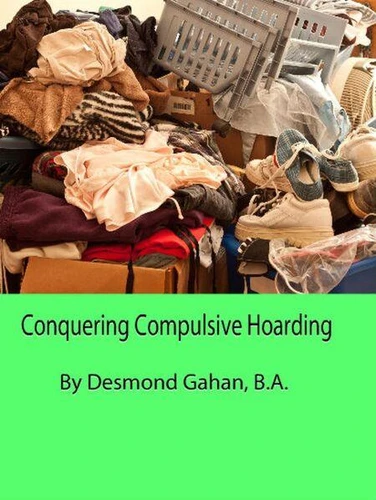
Conquering Compulsive Hoarding
Par :Formats :
Disponible dans votre compte client Decitre ou Furet du Nord dès validation de votre commande. Le format ePub est :
- Compatible avec une lecture sur My Vivlio (smartphone, tablette, ordinateur)
- Compatible avec une lecture sur liseuses Vivlio
- Pour les liseuses autres que Vivlio, vous devez utiliser le logiciel Adobe Digital Edition. Non compatible avec la lecture sur les liseuses Kindle, Remarkable et Sony
 , qui est-ce ?
Notre partenaire de plateforme de lecture numérique où vous retrouverez l'ensemble de vos ebooks gratuitement
Pour en savoir plus sur nos ebooks, consultez notre aide en ligne ici
C'est si simple ! Lisez votre ebook avec l'app Vivlio sur votre tablette, mobile ou ordinateur :

- FormatePub
- ISBN978-1-386-45941-5
- EAN9781386459415
- Date de parution14/06/2017
- Protection num.pas de protection
- Infos supplémentairesepub
- ÉditeurRelay Publishing
Résumé
Hoarding disorder is a persistent difficulty discarding or parting with possessions because of a perceived need to save them. A person with hoarding disorder experiences distress at the thought of getting rid of the items. Excessive accumulation of items, regardless of actual value, occurs. Hoarding often creates such cramped living conditions that homes may be filled to capacity, with only narrow pathways winding through stacks of clutter.
Countertops, sinks, stoves, desks, stairways and virtually all other surfaces are usually piled with stuff. And when there's no more room inside, the clutter may spread to the garage, vehicles, yard and other storage facilities. Hoarding ranges from mild to severe. In some cases, hoarding may not have much impact on your life, while in other cases it seriously affects your functioning on a daily basis.
People with hoarding disorder may not see it as a problem, making treatment challenging. But intensive treatment can help people with hoarding disorder understand how their beliefs and behaviors can be changed so that they can live safer, more enjoyable lives. Getting and saving an excessive number of items, gradual buildup of clutter in living spaces and difficulty discarding things are usually the first signs and symptoms of hoarding disorder, which often surfaces during the teenage to early adult years.
As the person grows older, he or she typically starts acquiring things for which there is no immediate need or space. By middle age, symptoms are often severe and may be harder to treat. Problems with hoarding gradually develop over time and tend to be a private behavior. Often, significant clutter has developed by the time it reaches the attention of others. Signs and symptoms may include: Excessively acquiring items that are not needed or for which there's no space Persistent difficulty throwing out or parting with your things, regardless of actual value Feeling a need to save these items, and being upset by the thought of discarding them Building up of clutter to the point where rooms become unusable Having a tendency toward indecisiveness, perfectionism, avoidance, procrastination, and problems with planning and organizing There is good news....the condition can be successfully treated.
Countertops, sinks, stoves, desks, stairways and virtually all other surfaces are usually piled with stuff. And when there's no more room inside, the clutter may spread to the garage, vehicles, yard and other storage facilities. Hoarding ranges from mild to severe. In some cases, hoarding may not have much impact on your life, while in other cases it seriously affects your functioning on a daily basis.
People with hoarding disorder may not see it as a problem, making treatment challenging. But intensive treatment can help people with hoarding disorder understand how their beliefs and behaviors can be changed so that they can live safer, more enjoyable lives. Getting and saving an excessive number of items, gradual buildup of clutter in living spaces and difficulty discarding things are usually the first signs and symptoms of hoarding disorder, which often surfaces during the teenage to early adult years.
As the person grows older, he or she typically starts acquiring things for which there is no immediate need or space. By middle age, symptoms are often severe and may be harder to treat. Problems with hoarding gradually develop over time and tend to be a private behavior. Often, significant clutter has developed by the time it reaches the attention of others. Signs and symptoms may include: Excessively acquiring items that are not needed or for which there's no space Persistent difficulty throwing out or parting with your things, regardless of actual value Feeling a need to save these items, and being upset by the thought of discarding them Building up of clutter to the point where rooms become unusable Having a tendency toward indecisiveness, perfectionism, avoidance, procrastination, and problems with planning and organizing There is good news....the condition can be successfully treated.