
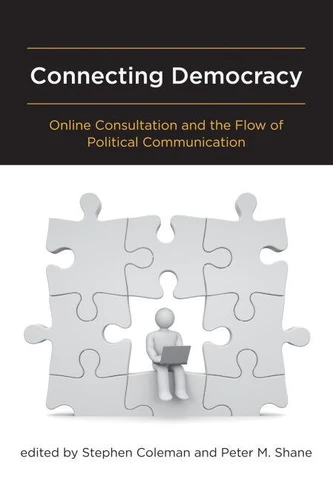
Connecting Democracy. Online Consultation and the Flow of Political Communication
Par : ,Formats :
Disponible dans votre compte client Decitre ou Furet du Nord dès validation de votre commande. Le format ePub protégé est :
- Compatible avec une lecture sur My Vivlio (smartphone, tablette, ordinateur)
- Compatible avec une lecture sur liseuses Vivlio
- Pour les liseuses autres que Vivlio, vous devez utiliser le logiciel Adobe Digital Edition. Non compatible avec la lecture sur les liseuses Kindle, Remarkable et Sony
- Non compatible avec un achat hors France métropolitaine
 , qui est-ce ?
Notre partenaire de plateforme de lecture numérique où vous retrouverez l'ensemble de vos ebooks gratuitement
Pour en savoir plus sur nos ebooks, consultez notre aide en ligne ici
C'est si simple ! Lisez votre ebook avec l'app Vivlio sur votre tablette, mobile ou ordinateur :

- Nombre de pages440
- FormatePub
- ISBN978-0-262-29792-9
- EAN9780262297929
- Date de parution16/12/2011
- Protection num.Adobe DRM
- Taille2 Mo
- Infos supplémentairesepub
- ÉditeurThe MIT Press
Résumé
An investigation of the effect of government online forums on democratic practices in the United States and Europe. The global explosion of online activity is steadily transforming the relationship between government and the public. The first wave of change, "e-government, " enlisted the Internet to improve management and the delivery of services. More recently, "e-democracy" has aimed to enhance democracy itself using digital information and communication technology.
One notable example of e-democratic practice is the government-sponsored (or government-authorized) online forum for public input on policymaking. This book investigates these "online consultations" and their effect on democratic practice in the United States and Europe, examining the potential of Internet-enabled policy forums to enrich democratic citizenship. The book first situates the online consultation phenomenon in a conceptual framework that takes into account the contemporary media environment and the flow of political communication; then offers a multifaceted look at the experience of online consultation participants in the United States, the United Kingdom, and France; and finally explores the legal architecture of U.
S. and E. U. online consultation. As the contributors make clear, online consultations are not simply dialogues between citizens and government but constitute networked communications involving citizens, government, technicians, civil society organizations, and the media. The topics examined are especially relevant today, in light of the Obama administration's innovations in online citizen involvement.
One notable example of e-democratic practice is the government-sponsored (or government-authorized) online forum for public input on policymaking. This book investigates these "online consultations" and their effect on democratic practice in the United States and Europe, examining the potential of Internet-enabled policy forums to enrich democratic citizenship. The book first situates the online consultation phenomenon in a conceptual framework that takes into account the contemporary media environment and the flow of political communication; then offers a multifaceted look at the experience of online consultation participants in the United States, the United Kingdom, and France; and finally explores the legal architecture of U.
S. and E. U. online consultation. As the contributors make clear, online consultations are not simply dialogues between citizens and government but constitute networked communications involving citizens, government, technicians, civil society organizations, and the media. The topics examined are especially relevant today, in light of the Obama administration's innovations in online citizen involvement.