
Montserrat Claveria is professor of Ancient Art History at the Universitat Autònoma de Barcelona and Associate Researcher at the Institut Català d'Arqueologia Clàssica.
Markus Trunk ist Professor für Klassische Archäologie an der Universität Trier. Seine Arbeitsgebiete umfassen unter anderem die römische Architektur sowie die kaiserzeitliche Skulptur und deren Rezeptionsgeschichte auf der Iberischen Halbinsel.
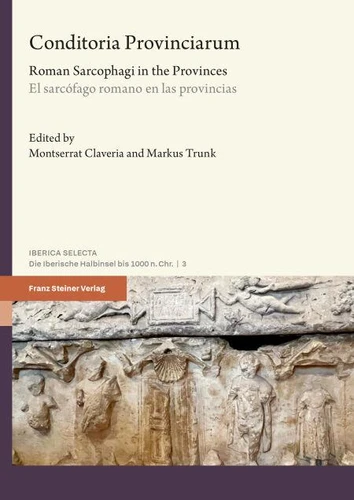
Conditoria Provinciarum. Roman Sarcophagi in the Provinces / El sarcófago romano en las provincias
Par : ,Formats :
Disponible dans votre compte client Decitre ou Furet du Nord dès validation de votre commande. Le format PDF est :
- Compatible avec une lecture sur My Vivlio (smartphone, tablette, ordinateur)
- Compatible avec une lecture sur liseuses Vivlio
- Pour les liseuses autres que Vivlio, vous devez utiliser le logiciel Adobe Digital Edition. Non compatible avec la lecture sur les liseuses Kindle, Remarkable et Sony
 , qui est-ce ?
Notre partenaire de plateforme de lecture numérique où vous retrouverez l'ensemble de vos ebooks gratuitement
Pour en savoir plus sur nos ebooks, consultez notre aide en ligne ici
C'est si simple ! Lisez votre ebook avec l'app Vivlio sur votre tablette, mobile ou ordinateur :

- Nombre de pages423
- FormatPDF
- ISBN978-3-515-13883-3
- EAN9783515138833
- Date de parution06/02/2025
- Protection num.Digital Watermarking
- Taille16 Mo
- Infos supplémentairespdf
- ÉditeurFranz Steiner
Résumé
Roman sarcophagi belong to the most important group of monuments in Roman art. This volume includes new findings and research on their shapes and use as well as regional differences in the provinces of the Roman Empire. The geographic scope ranges from Judaea (Jerusalem) via Asia Minor (Ephesos), Greece and Macedonia, Moesia and Pannonia to Italy, Gallia and finally the Iberian Peninsula, the time frame stretches from the earliest Roman sarcophagi burials to late antiquity.
In addition, the volume brings forward results of archaeometric analysis as well as epigraphic evidence.
Questions about polychromy are also considered, just like problems of restoration and storage of sarcophagi, including their reception, reutilization and importance in European collections of the 18th and 20th century. Thus, the articles represent a current review of the state of research on the field of sarcophagi research in the Roman provinces.
Questions about polychromy are also considered, just like problems of restoration and storage of sarcophagi, including their reception, reutilization and importance in European collections of the 18th and 20th century. Thus, the articles represent a current review of the state of research on the field of sarcophagi research in the Roman provinces.