
Nouveauté
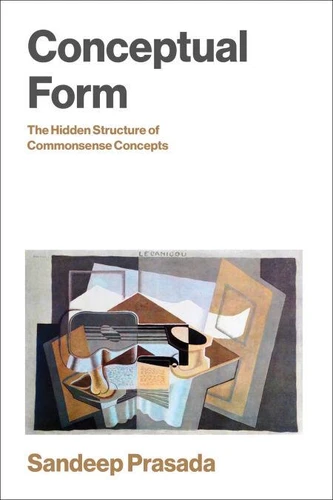
Conceptual Form. The Hidden Structure of Commonsense Concepts
Par :Formats :
Disponible dans votre compte client Decitre ou Furet du Nord dès validation de votre commande. Le format ePub protégé est :
- Compatible avec une lecture sur My Vivlio (smartphone, tablette, ordinateur)
- Compatible avec une lecture sur liseuses Vivlio
- Pour les liseuses autres que Vivlio, vous devez utiliser le logiciel Adobe Digital Edition. Non compatible avec la lecture sur les liseuses Kindle, Remarkable et Sony
- Non compatible avec un achat hors France métropolitaine
 , qui est-ce ?
Notre partenaire de plateforme de lecture numérique où vous retrouverez l'ensemble de vos ebooks gratuitement
Pour en savoir plus sur nos ebooks, consultez notre aide en ligne ici
C'est si simple ! Lisez votre ebook avec l'app Vivlio sur votre tablette, mobile ou ordinateur :

- Nombre de pages326
- FormatePub
- ISBN978-0-262-05315-0
- EAN9780262053150
- Date de parution18/08/2026
- Protection num.Adobe DRM
- Taille3 Mo
- Infos supplémentairesepub
- ÉditeurThe MIT Press
Résumé
A theory of the formal structure of commonsense concepts. In Conceptual Form, Sandeep Prasada develops a new and original approach to the study of commonsense concepts. He argues that lexically expressible concepts such as DOG possess a formal structure-a conceptual form-which provides perspectives for thinking, talking, and reasoning. These perspectives are not a property of the things the concept represents.
Rather, they are "mental lenses, " or ways of thinking and talking. The conceptual form functions as a mental lens by providing instructions for how to think and talk about what the concept represents. The book is unique in its focus on the formal dimension of commonsense concepts, its original proposal for how the type-token distinction is realized within our conceptual systems, its proposal that the core of concepts involves the acquisition of principles, not facts and generalizations, and its detailed consideration of linguistic and experimental data in the formulation of the theory of conceptual form.
Finally, this book provides a new perspective on classic questions concerning the atomicity and innateness of concepts. Even those who disagree with specific claims are likely to find the theoretical tools and distinctions introduced by the theory of conceptual form to be valuable in their investigation of concepts.
Rather, they are "mental lenses, " or ways of thinking and talking. The conceptual form functions as a mental lens by providing instructions for how to think and talk about what the concept represents. The book is unique in its focus on the formal dimension of commonsense concepts, its original proposal for how the type-token distinction is realized within our conceptual systems, its proposal that the core of concepts involves the acquisition of principles, not facts and generalizations, and its detailed consideration of linguistic and experimental data in the formulation of the theory of conceptual form.
Finally, this book provides a new perspective on classic questions concerning the atomicity and innateness of concepts. Even those who disagree with specific claims are likely to find the theoretical tools and distinctions introduced by the theory of conceptual form to be valuable in their investigation of concepts.