SOLDES
Jusqu'à -70% sur une sélection d'articles*

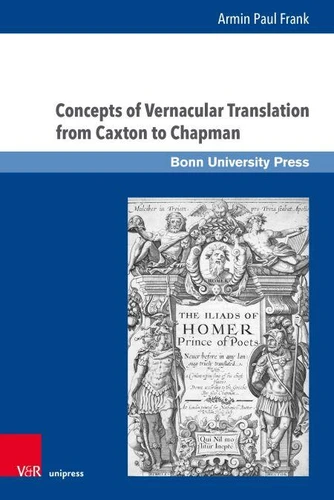
Concepts of Vernacular Translation from Caxton to Chapman. A Chronological Survey
Par :Formats :
Disponible dans votre compte client Decitre ou Furet du Nord dès validation de votre commande. Le format PDF est :
- Compatible avec une lecture sur My Vivlio (smartphone, tablette, ordinateur)
- Compatible avec une lecture sur liseuses Vivlio
- Pour les liseuses autres que Vivlio, vous devez utiliser le logiciel Adobe Digital Edition. Non compatible avec la lecture sur les liseuses Kindle, Remarkable et Sony
 , qui est-ce ?
Notre partenaire de plateforme de lecture numérique où vous retrouverez l'ensemble de vos ebooks gratuitement
Pour en savoir plus sur nos ebooks, consultez notre aide en ligne ici
C'est si simple ! Lisez votre ebook avec l'app Vivlio sur votre tablette, mobile ou ordinateur :

- Nombre de pages294
- FormatPDF
- ISBN978-3-8470-1751-6
- EAN9783847017516
- Date de parution08/09/2025
- Protection num.pas de protection
- Taille5 Mo
- Infos supplémentairespdf
- ÉditeurV&R Unipress
Résumé
In this volume, the author provides an overview of English concepts of translation into the vernacular from 1475 to 1611, the main period of the English Renaissance. The corpus consists of more than 200 documents, all of which are the front matters of translations published during this period. Almost all of these documents, which range in length from a few lines to around thirty pages of small print, are epistles dedicatory or prefaces.
The Renaissance is a period in which a concerted effort was made to turn to Latin and Greek authors in order to profit from their wisdom, learning, and art. Translations for the benefit of readers who are not proficient in foreign languages form a distinct branch of these endeavors as yet hardly recognized in their true nature, extent, and historical importance, namely vernacular Christian humanism.
The Renaissance is a period in which a concerted effort was made to turn to Latin and Greek authors in order to profit from their wisdom, learning, and art. Translations for the benefit of readers who are not proficient in foreign languages form a distinct branch of these endeavors as yet hardly recognized in their true nature, extent, and historical importance, namely vernacular Christian humanism.