SOLDES
Jusqu'à -70% sur une sélection d'articles*

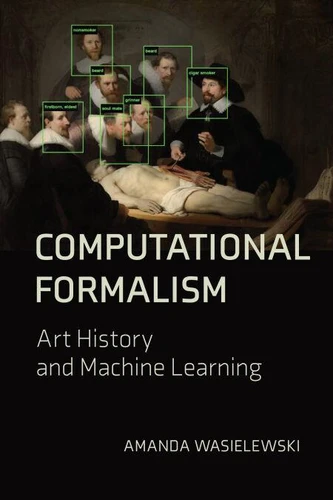
Computational Formalism. Art History and Machine Learning
Par :Formats :
Disponible dans votre compte client Decitre ou Furet du Nord dès validation de votre commande. Le format ePub protégé est :
- Compatible avec une lecture sur My Vivlio (smartphone, tablette, ordinateur)
- Compatible avec une lecture sur liseuses Vivlio
- Pour les liseuses autres que Vivlio, vous devez utiliser le logiciel Adobe Digital Edition. Non compatible avec la lecture sur les liseuses Kindle, Remarkable et Sony
- Non compatible avec un achat hors France métropolitaine
 , qui est-ce ?
Notre partenaire de plateforme de lecture numérique où vous retrouverez l'ensemble de vos ebooks gratuitement
Pour en savoir plus sur nos ebooks, consultez notre aide en ligne ici
C'est si simple ! Lisez votre ebook avec l'app Vivlio sur votre tablette, mobile ou ordinateur :

- Nombre de pages200
- FormatePub
- ISBN978-0-262-37474-3
- EAN9780262374743
- Date de parution23/05/2023
- Protection num.Adobe DRM
- Taille13 Mo
- Infos supplémentairesepub
- ÉditeurThe MIT Press
Résumé
How the use of machine learning to analyze art images has revived formalism in art history, presenting a golden opportunity for art historians and computer scientists to learn from one another. Though formalism is an essential tool for art historians, much recent art history has focused on the social and political aspects of art. But now art historians are adopting machine learning methods to develop new ways to analyze the purely visual in datasets of art images.
Amanda Wasielewski uses the term "computational formalism" to describe this use of machine learning and computer vision technique in art historical research. At the same time that art historians are analyzing art images in new ways, computer scientists are using art images for experiments in machine learning and computer vision. Their research, says Wasielewski, would be greatly enriched by the inclusion of humanistic issues.
The main purpose in applying computational techniques such as machine learning to art datasets is to automate the process of categorization using metrics such as style, a historically fraught concept in art history. After examining a fifteen-year trajectory in image categorization and art dataset creation in the fields of machine learning and computer vision, Wasielewski considers deep learning techniques that both create and detect forgeries and fakes in art.
She investigates examples of art historical analysis in the fields of computer and information sciences, placing this research in the context of art historiography. She also raises questions as which artworks are chosen for digitization, and of those artworks that are born digital, which works gain acceptance into the canon of high art.
Amanda Wasielewski uses the term "computational formalism" to describe this use of machine learning and computer vision technique in art historical research. At the same time that art historians are analyzing art images in new ways, computer scientists are using art images for experiments in machine learning and computer vision. Their research, says Wasielewski, would be greatly enriched by the inclusion of humanistic issues.
The main purpose in applying computational techniques such as machine learning to art datasets is to automate the process of categorization using metrics such as style, a historically fraught concept in art history. After examining a fifteen-year trajectory in image categorization and art dataset creation in the fields of machine learning and computer vision, Wasielewski considers deep learning techniques that both create and detect forgeries and fakes in art.
She investigates examples of art historical analysis in the fields of computer and information sciences, placing this research in the context of art historiography. She also raises questions as which artworks are chosen for digitization, and of those artworks that are born digital, which works gain acceptance into the canon of high art.