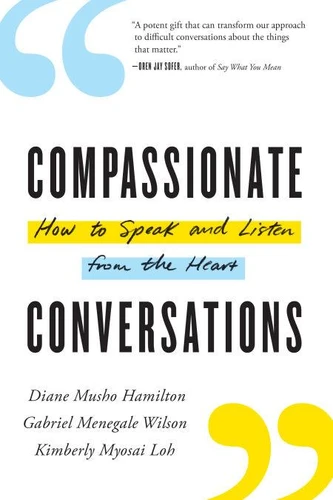
Compassionate Conversations. How to Speak and Listen from the Heart
Par : , ,Formats :
Disponible dans votre compte client Decitre ou Furet du Nord dès validation de votre commande. Le format ePub protégé est :
- Compatible avec une lecture sur My Vivlio (smartphone, tablette, ordinateur)
- Compatible avec une lecture sur liseuses Vivlio
- Pour les liseuses autres que Vivlio, vous devez utiliser le logiciel Adobe Digital Edition. Non compatible avec la lecture sur les liseuses Kindle, Remarkable et Sony
- Non compatible avec un achat hors France métropolitaine
 , qui est-ce ?
Notre partenaire de plateforme de lecture numérique où vous retrouverez l'ensemble de vos ebooks gratuitement
Pour en savoir plus sur nos ebooks, consultez notre aide en ligne ici
C'est si simple ! Lisez votre ebook avec l'app Vivlio sur votre tablette, mobile ou ordinateur :

- Nombre de pages240
- FormatePub
- ISBN978-0-8348-4264-9
- EAN9780834842649
- Date de parution19/05/2020
- Protection num.Adobe DRM
- Taille923 Ko
- Infos supplémentairesepub
- ÉditeurShambhala
Résumé
The definitive guide to learning effective skills for engaging in open and honest conversations about divisive issues from three professional mediators. When a conversation takes a turn into the sometimes uncomfortable and often contentious topics of race, religion, gender, sexuality, and politics, it can be difficult to know what to say or how to respond to someone you disagree with. Compassionate Conversations empowers us to transform these conversations into opportunities to bridge divides and mend relationships by providing the basic set of conflict resolution skills we need to be successful, including listening, reframing, and dealing with strong emotions.
Addressing the long history of injury and pain for marginalized groups, the authors explore topics like social privilege, power dynamics, and, political correctness allowing us to be more mindful in our conversations. Each chapter contains practices and reflection questions to help readers feel more prepared to talk through polarizing issues, ultimately encouraging us to take risks, to understand and recognize our deep commonalities, to be willing to make mistakes, and to become more intimate with expressing our truths, as well as listening to those of others.
Addressing the long history of injury and pain for marginalized groups, the authors explore topics like social privilege, power dynamics, and, political correctness allowing us to be more mindful in our conversations. Each chapter contains practices and reflection questions to help readers feel more prepared to talk through polarizing issues, ultimately encouraging us to take risks, to understand and recognize our deep commonalities, to be willing to make mistakes, and to become more intimate with expressing our truths, as well as listening to those of others.