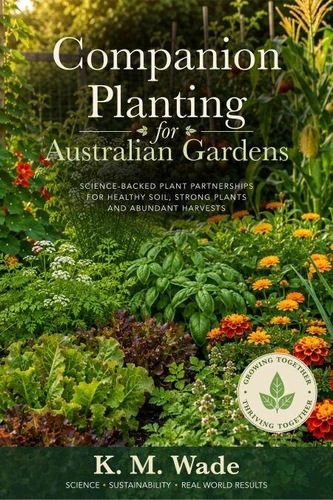
Australian gardeners know companion planting sounds wonderful in theory. Plant the right things together, reduce pests, improve soil, attract pollinators and grow a healthier, more productive garden. The problem? So much companion planting advice was written for European or American gardens, with different climates, pests, diseases and growing conditions. Companion Planting for Australian Gardens gives you a practical, Australian-focused guide to using companion plants with more confidence.
Instead of relying on vague folklore or one-size-fits-all planting charts, Kelly explains how companion planting works, why some combinations succeed, and how to choose useful companions for your own garden. Inside, you'll learn how to use companion plants to: Improve soil fertility with green manures, deep-rooted plants and nitrogen fixers Control weeds with living ground covers, allelopathic plants and grass barriers Reduce pest pressure with trap crops, aromatic plants and predator-attracting flowers Attract bees, ladybirds, lacewings, hoverflies, parasitic wasps, birds and other beneficial garden visitors Protect fruit trees with suitable ground covers, wind breaks and pollinator-friendly planting Understand mycorrhizal fungi and their role in plant health Evaluate companion planting combinations in your own garden, rather than blindly following advice that may not suit your conditions This 5th edition includes detailed plant lists, pest-specific companion suggestions, beneficial insect attractors, cover crop and green manure options, allelopathic plants, fruit tree companions and a quick reference chart for easier planning.
Whether you're growing vegetables, herbs, fruit trees, flowers or a mixed backyard garden, this book will help you think about planting combinations more strategically. You'll learn not only which plants may help each other, but what job each companion is doing, from improving nutrients and suppressing weeds to confusing pests and supporting garden predators. If you want a healthier, more productive garden with less reliance on sprays, synthetic fertilisers and guesswork, Companion Planting for Australian Gardens will help you plan a garden where plants work together, saving you mountains of time and effort.
Australian gardeners know companion planting sounds wonderful in theory. Plant the right things together, reduce pests, improve soil, attract pollinators and grow a healthier, more productive garden. The problem? So much companion planting advice was written for European or American gardens, with different climates, pests, diseases and growing conditions. Companion Planting for Australian Gardens gives you a practical, Australian-focused guide to using companion plants with more confidence.
Instead of relying on vague folklore or one-size-fits-all planting charts, Kelly explains how companion planting works, why some combinations succeed, and how to choose useful companions for your own garden. Inside, you'll learn how to use companion plants to: Improve soil fertility with green manures, deep-rooted plants and nitrogen fixers Control weeds with living ground covers, allelopathic plants and grass barriers Reduce pest pressure with trap crops, aromatic plants and predator-attracting flowers Attract bees, ladybirds, lacewings, hoverflies, parasitic wasps, birds and other beneficial garden visitors Protect fruit trees with suitable ground covers, wind breaks and pollinator-friendly planting Understand mycorrhizal fungi and their role in plant health Evaluate companion planting combinations in your own garden, rather than blindly following advice that may not suit your conditions This 5th edition includes detailed plant lists, pest-specific companion suggestions, beneficial insect attractors, cover crop and green manure options, allelopathic plants, fruit tree companions and a quick reference chart for easier planning.
Whether you're growing vegetables, herbs, fruit trees, flowers or a mixed backyard garden, this book will help you think about planting combinations more strategically. You'll learn not only which plants may help each other, but what job each companion is doing, from improving nutrients and suppressing weeds to confusing pests and supporting garden predators. If you want a healthier, more productive garden with less reliance on sprays, synthetic fertilisers and guesswork, Companion Planting for Australian Gardens will help you plan a garden where plants work together, saving you mountains of time and effort.


 , qui est-ce ?

