SOLDES
Jusqu'à -70% sur une sélection d'articles*

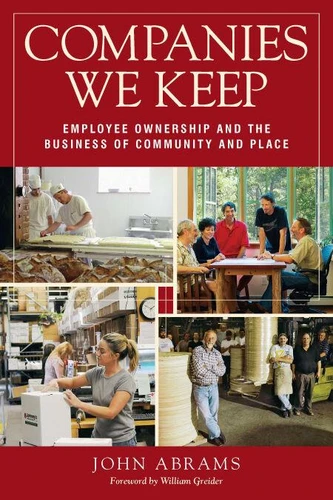
Companies We Keep. Employee Ownership and the Business of Community and Place, 2nd Edition
Par : ,Formats :
Disponible dans votre compte client Decitre ou Furet du Nord dès validation de votre commande. Le format ePub protégé est :
- Compatible avec une lecture sur My Vivlio (smartphone, tablette, ordinateur)
- Compatible avec une lecture sur liseuses Vivlio
- Pour les liseuses autres que Vivlio, vous devez utiliser le logiciel Adobe Digital Edition. Non compatible avec la lecture sur les liseuses Kindle, Remarkable et Sony
- Non compatible avec un achat hors France métropolitaine
 , qui est-ce ?
Notre partenaire de plateforme de lecture numérique où vous retrouverez l'ensemble de vos ebooks gratuitement
Pour en savoir plus sur nos ebooks, consultez notre aide en ligne ici
C'est si simple ! Lisez votre ebook avec l'app Vivlio sur votre tablette, mobile ou ordinateur :

- Nombre de pages352
- FormatePub
- ISBN978-1-60358-140-0
- EAN9781603581400
- Date de parution08/11/2008
- Protection num.Adobe DRM
- Taille5 Mo
- Infos supplémentairesepub
- ÉditeurChelsea Green
Résumé
Part memoir and part examination of a new business model, the 2005 release of The Company We Keep marked the debut of an important new voice in the literature of American business. Now, in Companies We Keep, the revised and expanded edition of his 2005 work, John Abrams further develops his idea that companies flourish when they become centers of interdependence, or "communities of enterprise."Thoroughly revised with an expanded focus on employee ownership and workplace democracy, Companies We Keep celebrates the idea that when employees share in the rewards as well as the responsibility for the decisions they make, better decisions result.
This is an especially timely topic. Most of the baby boomer generation-the owners of millions of American businesses- will retire within the next two decades. In 2001, 50, 000 businesses changed hands. In 2005, that number rose to 350, 000. Projections call for 750, 000 ownership transitions in 2009. Employee ownership-in both the philosophical and the practical sense-is gathering steam as businesses change hands, and Abrams examines some of the many ways this is done.
Companies We Keep is structured around eight principles-from "Sharing Ownership" and "Cultivating Workplace Democracy" to "Thinking Like Cathedral Builders" and "Committing to the Business of Place"-that Abrams has discovered in the 32 years since he cofounded South Mountain Company on the island of Martha's Vineyard. Together, these principles reveal communities of enterprise as a potent force of change that can-and will- improve the way Americans do business.
This is an especially timely topic. Most of the baby boomer generation-the owners of millions of American businesses- will retire within the next two decades. In 2001, 50, 000 businesses changed hands. In 2005, that number rose to 350, 000. Projections call for 750, 000 ownership transitions in 2009. Employee ownership-in both the philosophical and the practical sense-is gathering steam as businesses change hands, and Abrams examines some of the many ways this is done.
Companies We Keep is structured around eight principles-from "Sharing Ownership" and "Cultivating Workplace Democracy" to "Thinking Like Cathedral Builders" and "Committing to the Business of Place"-that Abrams has discovered in the 32 years since he cofounded South Mountain Company on the island of Martha's Vineyard. Together, these principles reveal communities of enterprise as a potent force of change that can-and will- improve the way Americans do business.