SOLDES
Jusqu'à -70% sur une sélection d'articles*

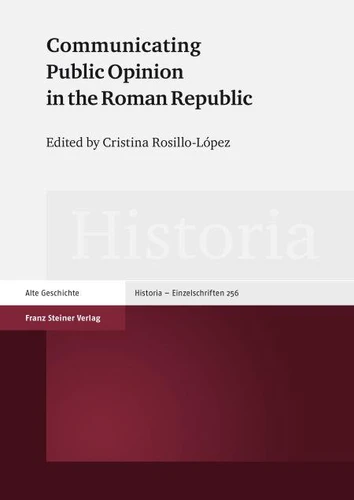
Communicating Public Opinion in the Roman Republic
Par :Formats :
Disponible dans votre compte client Decitre ou Furet du Nord dès validation de votre commande. Le format PDF est :
- Compatible avec une lecture sur My Vivlio (smartphone, tablette, ordinateur)
- Compatible avec une lecture sur liseuses Vivlio
- Pour les liseuses autres que Vivlio, vous devez utiliser le logiciel Adobe Digital Edition. Non compatible avec la lecture sur les liseuses Kindle, Remarkable et Sony
 , qui est-ce ?
Notre partenaire de plateforme de lecture numérique où vous retrouverez l'ensemble de vos ebooks gratuitement
Pour en savoir plus sur nos ebooks, consultez notre aide en ligne ici
C'est si simple ! Lisez votre ebook avec l'app Vivlio sur votre tablette, mobile ou ordinateur :

- Nombre de pages304
- FormatPDF
- ISBN978-3-515-12173-6
- EAN9783515121736
- Date de parution03/04/2019
- Protection num.Digital Watermarking
- Taille2 Mo
- Infos supplémentairespdf
- ÉditeurFranz Steiner
Résumé
From assemblies to courts of justice, from the Senate to the battlefield, from Rome to the provinces: public opinion could vary and take many guises. Roman politicians were aware of its existence and influence, and engaged with it.
This e-book offers a study of public opinion in the Roman Republic, with an emphasis from the 3rd to 1st centuries BC. It focusses on four main issues: nature and components of public opinion; public opinion in relation to military and administrative questions; the interaction between public opinion and public dialogue and, finally, the transmission of public opinion.
It furthermore asks the following question: Who was the populus Romanus? How did public opinion influence specific political or military decisions? Can Habermas' view of public opinion be applied to the Roman Republic? How was the rhetoric of fear applied to public opinion? Drawing on the more recent interpretations of Roman Republic, this volume studies the mechanisms that make public opinion and politics work at many different levels.
It provides an engaging view on political communication and the interaction between the elite and the people.
It furthermore asks the following question: Who was the populus Romanus? How did public opinion influence specific political or military decisions? Can Habermas' view of public opinion be applied to the Roman Republic? How was the rhetoric of fear applied to public opinion? Drawing on the more recent interpretations of Roman Republic, this volume studies the mechanisms that make public opinion and politics work at many different levels.
It provides an engaging view on political communication and the interaction between the elite and the people.