SOLDES
Jusqu'à -70% sur une sélection d'articles*

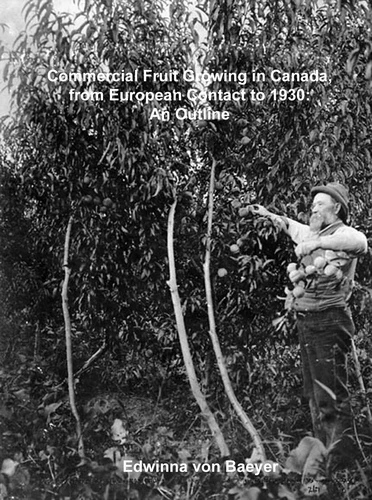
Commercial Fruit Growing in Canada, from European Contact to 1930: An Outline
Par :Formats :
Disponible dans votre compte client Decitre ou Furet du Nord dès validation de votre commande. Le format ePub est :
- Compatible avec une lecture sur My Vivlio (smartphone, tablette, ordinateur)
- Compatible avec une lecture sur liseuses Vivlio
- Pour les liseuses autres que Vivlio, vous devez utiliser le logiciel Adobe Digital Edition. Non compatible avec la lecture sur les liseuses Kindle, Remarkable et Sony
 , qui est-ce ?
Notre partenaire de plateforme de lecture numérique où vous retrouverez l'ensemble de vos ebooks gratuitement
Pour en savoir plus sur nos ebooks, consultez notre aide en ligne ici
C'est si simple ! Lisez votre ebook avec l'app Vivlio sur votre tablette, mobile ou ordinateur :

- FormatePub
- ISBN978-0-9692100-3-0
- EAN9780969210030
- Date de parution27/05/2019
- Protection num.pas de protection
- Infos supplémentairesepub
- ÉditeurEdwinna von Baeyer
Résumé
Commercial Fruit Growing in Canada, from European Contact to 1930: An Outline describes the beginnings of commercial fruit growing in Canada, up until 1930 when it had matured into a strong industry. The book is a broad history, touching on various themes such as the continuing refinement of horticultural practices, the process from cultivation to storage and to transportation; the rise of standardization; and the influence of science and technology on horticulture.
It is not a detailed history of horticultural techniques, such as orchard, market garden or greenhouse cultivation, nor an economic history of the Canadian fruit industry. I leave such histories to future horticultural historians. The advances in cultivation, marketing, storage, packaging and transportation are traced that enabled the rise of commercial fruit growing. As well, plant breeding (hardiness is a prime factor for Canadian plants) and plant registration (protecting the rights of plant breeders) are highlighted.
The men and women, publishers, associations and government enablers are also focused on. In fact, the last chapter is devoted to short biographies of fruit growers, government officials, association members, nursery owners, seed sellers, plant breeders, etc. who were key participants in the growth of commercial fruit growing in Canada. The story stops at 1930. Why? By 1930, most of the supports, tools, markets and science were in place that would carry the Canadian fruit industry into modern times.
It is not a detailed history of horticultural techniques, such as orchard, market garden or greenhouse cultivation, nor an economic history of the Canadian fruit industry. I leave such histories to future horticultural historians. The advances in cultivation, marketing, storage, packaging and transportation are traced that enabled the rise of commercial fruit growing. As well, plant breeding (hardiness is a prime factor for Canadian plants) and plant registration (protecting the rights of plant breeders) are highlighted.
The men and women, publishers, associations and government enablers are also focused on. In fact, the last chapter is devoted to short biographies of fruit growers, government officials, association members, nursery owners, seed sellers, plant breeders, etc. who were key participants in the growth of commercial fruit growing in Canada. The story stops at 1930. Why? By 1930, most of the supports, tools, markets and science were in place that would carry the Canadian fruit industry into modern times.