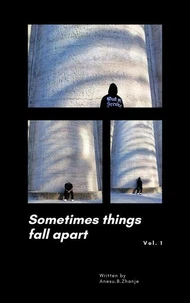
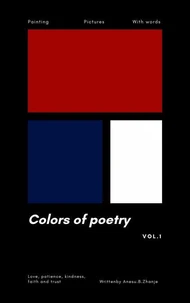
Anesu Zhanje first broke onto the literary scene with his debut work Sometimes Things Fall Apart, a raw and emotionally honest introduction that immediately signaled the arrival of a distinctive new voice. From the beginning, his writing carried a sense of urgency an unfiltered attempt to translate lived experience into language. Following this debut, Anesu expanded his artistic vision through Colors of Poetry, a series that quickly established itself as a defining body of work.
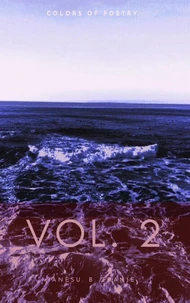
Volume 1 introduced readers to his signature style: vivid imagery, and a deeply personal approach to emotional expression. It felt like watching an artist paint in real time unpolished in places, but striking in its authenticity and ambition. More than a collection of poems, it was an assertion of identity and ownership over voice and narrative. With Volume 2, the series matured significantly. The writing deepened in emotional range and thematic complexity, exploring grief, love, resilience, and spiritual reflection with greater control and clarity.
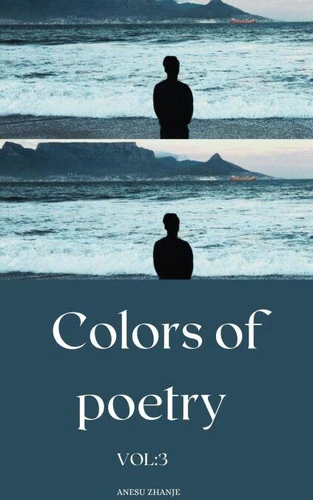
Many readers regard it as a major milestone in his development, marking a shift from raw expression to refined emotional storytelling. It stands as a work that solidified Anesu's place as a serious emerging poetic voice. Now, with Colors of Poetry Vol. 3the trilogy reaches its conclusion. This final installment represents both culmination and release a work where the author fully surrenders to his central metaphors of waves, tides, and deep water.
The writing becomes more fluid, more immersive, and more emotionally unrestrained, as if the ink itself is dissolving into the ocean it has long been describing. Volume 3 does not simply continue the journey; it completes it. Themes introduced in earlier volumes return with greater weight and resolution love as a constant force, grief as a shaping presence, and survival as an act of quiet courage.
The author's voice feels fully realized here, moving beyond experimentation into full artistic embodiment. Across the trilogy, Anesu Zhanje's work reflects an upward trajectory defined not by external validation, but by deepening emotional honesty and creative control. From debut to culmination, the Colors of Poetry series stands as a testament to artistic growth, resilience, and the power of claiming one's story through language.
With Volume 3, the era closes not with an ending, but with a becoming. The author does not merely describe the waves anymore; he becomes them.
Anesu Zhanje first broke onto the literary scene with his debut work Sometimes Things Fall Apart, a raw and emotionally honest introduction that immediately signaled the arrival of a distinctive new voice. From the beginning, his writing carried a sense of urgency an unfiltered attempt to translate lived experience into language. Following this debut, Anesu expanded his artistic vision through Colors of Poetry, a series that quickly established itself as a defining body of work.
Volume 1 introduced readers to his signature style: vivid imagery, and a deeply personal approach to emotional expression. It felt like watching an artist paint in real time unpolished in places, but striking in its authenticity and ambition. More than a collection of poems, it was an assertion of identity and ownership over voice and narrative. With Volume 2, the series matured significantly. The writing deepened in emotional range and thematic complexity, exploring grief, love, resilience, and spiritual reflection with greater control and clarity.
Many readers regard it as a major milestone in his development, marking a shift from raw expression to refined emotional storytelling. It stands as a work that solidified Anesu's place as a serious emerging poetic voice. Now, with Colors of Poetry Vol. 3the trilogy reaches its conclusion. This final installment represents both culmination and release a work where the author fully surrenders to his central metaphors of waves, tides, and deep water.
The writing becomes more fluid, more immersive, and more emotionally unrestrained, as if the ink itself is dissolving into the ocean it has long been describing. Volume 3 does not simply continue the journey; it completes it. Themes introduced in earlier volumes return with greater weight and resolution love as a constant force, grief as a shaping presence, and survival as an act of quiet courage.
The author's voice feels fully realized here, moving beyond experimentation into full artistic embodiment. Across the trilogy, Anesu Zhanje's work reflects an upward trajectory defined not by external validation, but by deepening emotional honesty and creative control. From debut to culmination, the Colors of Poetry series stands as a testament to artistic growth, resilience, and the power of claiming one's story through language.
With Volume 3, the era closes not with an ending, but with a becoming. The author does not merely describe the waves anymore; he becomes them.

 , qui est-ce ?