
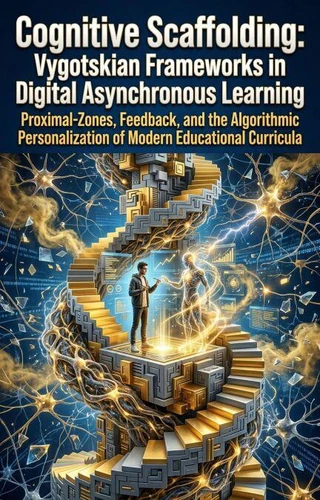
Cognitive Scaffolding: Vygotskian Frameworks in Digital Asynchronous Learning. Proximal-Zones, Feedback, and the Algorithmic Personalization of Modern Educational Curricula
Par :Formats :
Disponible dans votre compte client Decitre ou Furet du Nord dès validation de votre commande. Le format ePub est :
- Compatible avec une lecture sur My Vivlio (smartphone, tablette, ordinateur)
- Compatible avec une lecture sur liseuses Vivlio
- Pour les liseuses autres que Vivlio, vous devez utiliser le logiciel Adobe Digital Edition. Non compatible avec la lecture sur les liseuses Kindle, Remarkable et Sony
 , qui est-ce ?
Notre partenaire de plateforme de lecture numérique où vous retrouverez l'ensemble de vos ebooks gratuitement
Pour en savoir plus sur nos ebooks, consultez notre aide en ligne ici
C'est si simple ! Lisez votre ebook avec l'app Vivlio sur votre tablette, mobile ou ordinateur :

- Nombre de pages147
- FormatePub
- ISBN978-3-565-39424-1
- EAN9783565394241
- Date de parution08/04/2026
- Protection num.pas de protection
- Taille936 Ko
- Infos supplémentairesepub
- ÉditeurEmphaloz Publishing House
Résumé
Decades before the invention of the internet, the developmental psychologist Lev Vygotsky theorized the "Zone of Proximal Development"-the critical, fragile learning space where a student can only master a complex task with temporary, highly targeted guidance. In a traditional classroom environment, an experienced teacher provides this structural "scaffolding" instinctively. Replicating this delicate, empathetic psychological support within a fully automated, asynchronous digital platform remains the ultimate hurdle of modern educational technology.
To keep isolated students from abandoning frustrating material, digital curricula must employ highly sophisticated algorithms that constantly measure comprehension latency.
When a student repeatedly falters on a concept, the software must instantly deploy calibrated micro-interventions: breaking down a massive math equation into smaller interactive steps, or offering contextual historical hints rather than simply flashing the correct answer in red. Deconstruct the precise architecture of digital pedagogy. Explore how software developers are successfully translating mid-century psychological theories into dynamic code to create deeply personalized, algorithmic tutoring systems.
When a student repeatedly falters on a concept, the software must instantly deploy calibrated micro-interventions: breaking down a massive math equation into smaller interactive steps, or offering contextual historical hints rather than simply flashing the correct answer in red. Deconstruct the precise architecture of digital pedagogy. Explore how software developers are successfully translating mid-century psychological theories into dynamic code to create deeply personalized, algorithmic tutoring systems.