SOLDES
Jusqu'à -70% sur une sélection d'articles*

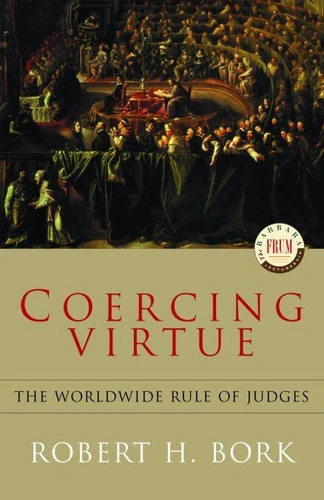
Coercing Virtue. The Worldwide Rule of Judges
Par :Formats :
Disponible dans votre compte client Decitre ou Furet du Nord dès validation de votre commande. Le format ePub protégé est :
- Compatible avec une lecture sur My Vivlio (smartphone, tablette, ordinateur)
- Compatible avec une lecture sur liseuses Vivlio
- Pour les liseuses autres que Vivlio, vous devez utiliser le logiciel Adobe Digital Edition. Non compatible avec la lecture sur les liseuses Kindle, Remarkable et Sony
- Non compatible avec un achat hors France métropolitaine
 , qui est-ce ?
Notre partenaire de plateforme de lecture numérique où vous retrouverez l'ensemble de vos ebooks gratuitement
Pour en savoir plus sur nos ebooks, consultez notre aide en ligne ici
C'est si simple ! Lisez votre ebook avec l'app Vivlio sur votre tablette, mobile ou ordinateur :

- Nombre de pages208
- FormatePub
- ISBN978-0-307-36853-9
- EAN9780307368539
- Date de parution07/07/2010
- Protection num.Adobe DRM
- Taille2 Mo
- Infos supplémentairesepub
- ÉditeurVintage Canada
Résumé
Judge Robert H. Bork will deliver the Barbara Frum Historical Lecture at the University of Toronto in March 2002. This annual lecture "on a subject of contemporary history in historical perspective" was established in memory of Barbara Frum and will be broadcast on the CBC Radio program Ideas. In Coercing Virtue, former US solicitor general Robert H. Bork examines judicial activism and the practice of many courts as they consider and decide matters that are not committed to their authority.
In his opinion, this practice infringes on the legitimate domains of the executive and legislative branches of government and constitutes a judicialization of politics and morals. Should courts be used as a vehicle of social change even if the majority view weighs against the court's ruling? And if we allow courts to make law, especially in a country like Canada where our Supreme Court judges aren't even elected, then what does this mean for democratic government?"The nations of the West have long been afraid of catching the "American disease" - the seizure by judges of authority properly belonging to the people and their elected representatives.
Those nations are learning, perhaps too late, that this imperialism is not an American disease; it is a judicial disease, one that knows no boundaries." - Robert H. Bork, from Coercing Virtue
In his opinion, this practice infringes on the legitimate domains of the executive and legislative branches of government and constitutes a judicialization of politics and morals. Should courts be used as a vehicle of social change even if the majority view weighs against the court's ruling? And if we allow courts to make law, especially in a country like Canada where our Supreme Court judges aren't even elected, then what does this mean for democratic government?"The nations of the West have long been afraid of catching the "American disease" - the seizure by judges of authority properly belonging to the people and their elected representatives.
Those nations are learning, perhaps too late, that this imperialism is not an American disease; it is a judicial disease, one that knows no boundaries." - Robert H. Bork, from Coercing Virtue