SOLDES
Jusqu'à -70% sur une sélection d'articles*

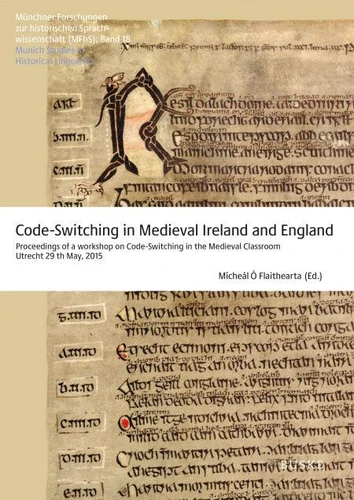
Code-Switching in Medieval Ireland and England. Proceedings of a workshop on Code-Switching in the Medieval Classroom, Utrecht 29th May, 2015
Par :Formats :
Disponible dans votre compte client Decitre ou Furet du Nord dès validation de votre commande. Le format PDF est :
- Compatible avec une lecture sur My Vivlio (smartphone, tablette, ordinateur)
- Compatible avec une lecture sur liseuses Vivlio
- Pour les liseuses autres que Vivlio, vous devez utiliser le logiciel Adobe Digital Edition. Non compatible avec la lecture sur les liseuses Kindle, Remarkable et Sony
 , qui est-ce ?
Notre partenaire de plateforme de lecture numérique où vous retrouverez l'ensemble de vos ebooks gratuitement
Pour en savoir plus sur nos ebooks, consultez notre aide en ligne ici
C'est si simple ! Lisez votre ebook avec l'app Vivlio sur votre tablette, mobile ou ordinateur :

- Nombre de pages125
- FormatPDF
- ISBN978-3-96769-742-1
- EAN9783967697421
- Date de parution27/06/2025
- Protection num.Digital Watermarking
- Taille15 Mo
- Infos supplémentairespdf
- ÉditeurHelmut Buske Verlag
Résumé
This book comprises the results of the workshop »Code-switching in the Medieval classroom« , which was held at Utrecht University on May 29th, 2015. The workshop was part of the research project entitled Bilingualism in Medieval Ireland - language choice as part of intellectual culture. The stated aim of the research project as well as of this volume is to open up the rich legacy of bilingual texts from particularly Medieval Ireland to a wider academic audience interested in medieval studies, literacy, bilingualism and code-switching.
The papers in this volume contribute to both the debates on medieval reception, medieval elite culture and education, as well as the theories on bilingualism and code-switching by studying the nature and function of Irish-Latin and English-Latin code-switching in a number of medieval text corpora, shedding new light on the way in which clergymen blended indigenous language and culture with late Antique Roman culture that was introduced together with Christianity.
The papers in this volume contribute to both the debates on medieval reception, medieval elite culture and education, as well as the theories on bilingualism and code-switching by studying the nature and function of Irish-Latin and English-Latin code-switching in a number of medieval text corpora, shedding new light on the way in which clergymen blended indigenous language and culture with late Antique Roman culture that was introduced together with Christianity.