
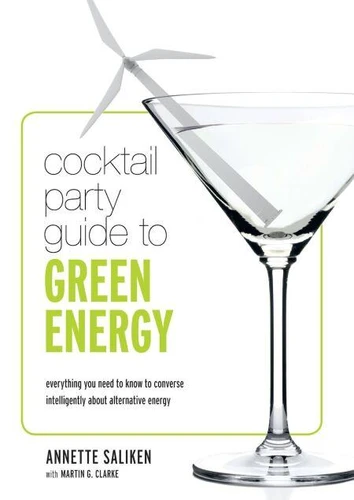
Cocktail Party Guide to Green Energy. Everything you need to know to converse intelligently about alternative energy
Par :Formats :
Disponible dans votre compte client Decitre ou Furet du Nord dès validation de votre commande. Le format ePub est :
- Compatible avec une lecture sur My Vivlio (smartphone, tablette, ordinateur)
- Compatible avec une lecture sur liseuses Vivlio
- Pour les liseuses autres que Vivlio, vous devez utiliser le logiciel Adobe Digital Edition. Non compatible avec la lecture sur les liseuses Kindle, Remarkable et Sony
 , qui est-ce ?
Notre partenaire de plateforme de lecture numérique où vous retrouverez l'ensemble de vos ebooks gratuitement
Pour en savoir plus sur nos ebooks, consultez notre aide en ligne ici
C'est si simple ! Lisez votre ebook avec l'app Vivlio sur votre tablette, mobile ou ordinateur :

- Nombre de pages192
- FormatePub
- ISBN978-1-926936-88-8
- EAN9781926936888
- Date de parution15/12/2011
- Protection num.Digital Watermarking
- Taille2 Mo
- Infos supplémentairesepub
- ÉditeurHeritage House
Résumé
Green energy is no longer a futuristic notion-it's rapidly entering the mainstream of society. From the author of the acclaimed Cocktail Party Guide to Global Warming, this enlightening new book provides readers with everything they need to know to understand green energy options and make informed choices in their everyday lives.
Using clear, objective language, Annette Saliken describes each type of green energy and shares exciting breakthroughs in solar, wind, geothermal, geoexchange, hydro, wave, tidal and biomass energy.
She compares the pros and cons as well as the costs of various types of green energy, and offers straightforward answers to such frequently asked questions as: What is the difference between wave energy and tidal current energy? How is biomass carbon neutral? What is the difference between geothermal and geoexchange energy? Are fuel cells a type of alternative energy? How does using solar panels for electricity differ from using solar heat? Annette offers a concise look at how we can address our growing energy needs in a way that moves society toward innovation and economic growth and away from greenhouse-gas emissions, oil spills and rising fuel prices.
She compares the pros and cons as well as the costs of various types of green energy, and offers straightforward answers to such frequently asked questions as: What is the difference between wave energy and tidal current energy? How is biomass carbon neutral? What is the difference between geothermal and geoexchange energy? Are fuel cells a type of alternative energy? How does using solar panels for electricity differ from using solar heat? Annette offers a concise look at how we can address our growing energy needs in a way that moves society toward innovation and economic growth and away from greenhouse-gas emissions, oil spills and rising fuel prices.