
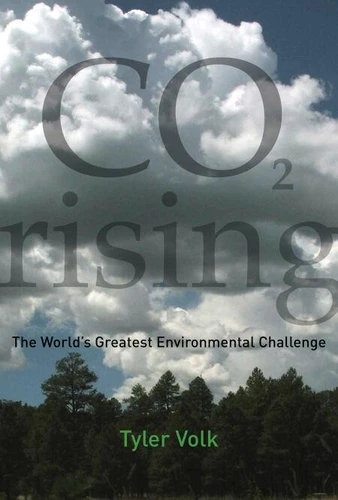
CO2 Rising. The World's Greatest Environmental Challenge
Par :Formats :
Disponible dans votre compte client Decitre ou Furet du Nord dès validation de votre commande. Le format ePub protégé est :
- Compatible avec une lecture sur My Vivlio (smartphone, tablette, ordinateur)
- Compatible avec une lecture sur liseuses Vivlio
- Pour les liseuses autres que Vivlio, vous devez utiliser le logiciel Adobe Digital Edition. Non compatible avec la lecture sur les liseuses Kindle, Remarkable et Sony
- Non compatible avec un achat hors France métropolitaine
 , qui est-ce ?
Notre partenaire de plateforme de lecture numérique où vous retrouverez l'ensemble de vos ebooks gratuitement
Pour en savoir plus sur nos ebooks, consultez notre aide en ligne ici
C'est si simple ! Lisez votre ebook avec l'app Vivlio sur votre tablette, mobile ou ordinateur :

- Nombre de pages240
- FormatePub
- ISBN978-0-262-26501-0
- EAN9780262265010
- Date de parution24/09/2010
- Protection num.Adobe DRM
- Taille2 Mo
- Infos supplémentairesepub
- ÉditeurThe MIT Press
Résumé
An introduction to the global carbon cycle and the human-caused disturbances to it that are at the heart of global warming and climate change. The most colossal environmental disturbance in human history is under way. Ever-rising levels of the potent greenhouse gas carbon dioxide (CO2) are altering the cycles of matter and life and interfering with the Earth's natural cooling process. Melting Arctic ice and mountain glaciers are just the first relatively mild symptoms of what will result from this disruption of the planetary energy balance.
In CO2 Rising, scientist Tyler Volk explains the process at the heart of global warming and climate change: the global carbon cycle. Vividly and concisely, Volk describes what happens when CO2 is released by the combustion of fossil fuels (coal, oil, and natural gas), letting loose carbon atoms once trapped deep underground into the interwoven web of air, water, and soil. To demonstrate how the carbon cycle works, Volk traces the paths that carbon atoms take during their global circuits.
Showing us the carbon cycle from a carbon atom's viewpoint, he follows one carbon atom into a leaf of barley and then into an alcohol molecule in a glass of beer, through the human bloodstream, and then back into the air. He also compares the fluxes of carbon brought into the biosphere naturally against those created by the combustion of fossil fuels and explains why the latter are responsible for rising temperatures.
Knowledge about the global carbon cycle and the huge disturbances that human activity produces in it will equip us to consider the hard questions that Volk raises in the second half of CO2 Rising: projections of future levels of CO2; which energy systems and processes (solar, wind, nuclear, carbon sequestration?) will power civilization in the future; the relationships among the wealth of nations, energy use, and CO2 emissions; and global equity in per capita emissions.
Answering these questions will indeed be our greatest environmental challenge.
In CO2 Rising, scientist Tyler Volk explains the process at the heart of global warming and climate change: the global carbon cycle. Vividly and concisely, Volk describes what happens when CO2 is released by the combustion of fossil fuels (coal, oil, and natural gas), letting loose carbon atoms once trapped deep underground into the interwoven web of air, water, and soil. To demonstrate how the carbon cycle works, Volk traces the paths that carbon atoms take during their global circuits.
Showing us the carbon cycle from a carbon atom's viewpoint, he follows one carbon atom into a leaf of barley and then into an alcohol molecule in a glass of beer, through the human bloodstream, and then back into the air. He also compares the fluxes of carbon brought into the biosphere naturally against those created by the combustion of fossil fuels and explains why the latter are responsible for rising temperatures.
Knowledge about the global carbon cycle and the huge disturbances that human activity produces in it will equip us to consider the hard questions that Volk raises in the second half of CO2 Rising: projections of future levels of CO2; which energy systems and processes (solar, wind, nuclear, carbon sequestration?) will power civilization in the future; the relationships among the wealth of nations, energy use, and CO2 emissions; and global equity in per capita emissions.
Answering these questions will indeed be our greatest environmental challenge.