SOLDES
Jusqu'à -70% sur une sélection d'articles*

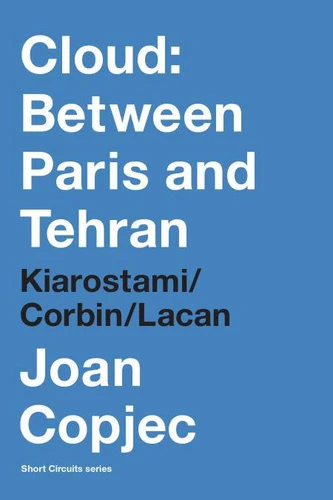
Cloud: Between Paris and Tehran /anglais
Par :Formats :
Disponible dans votre compte client Decitre ou Furet du Nord dès validation de votre commande. Le format ePub protégé est :
- Compatible avec une lecture sur My Vivlio (smartphone, tablette, ordinateur)
- Compatible avec une lecture sur liseuses Vivlio
- Pour les liseuses autres que Vivlio, vous devez utiliser le logiciel Adobe Digital Edition. Non compatible avec la lecture sur les liseuses Kindle, Remarkable et Sony
- Non compatible avec un achat hors France métropolitaine
 , qui est-ce ?
Notre partenaire de plateforme de lecture numérique où vous retrouverez l'ensemble de vos ebooks gratuitement
Pour en savoir plus sur nos ebooks, consultez notre aide en ligne ici
C'est si simple ! Lisez votre ebook avec l'app Vivlio sur votre tablette, mobile ou ordinateur :

- Nombre de pages208
- FormatePub
- ISBN978-0-262-38328-8
- EAN9780262383288
- Date de parution06/05/2025
- Protection num.Adobe DRM
- Taille383 Ko
- Infos supplémentairesepub
- ÉditeurThe MIT Press
Résumé
A theoretical examination of veiling, shame, and modesty in the films of the Iranian director Abbas Kiarostami through the lenses of Islamic philosophy and Lacanian psychoanalysis. In Cloud: Between Paris and Tehran, Joan Copjec examines the films of the Iranian director Abbas Kiarostami. The key to these films, she argues, lies in the image of a fragile yet sheltering tree that appears in several of his films.
This simple image depicts a central concept of Islamic philosophy, which is known as the "Cloud" or the "Imaginal World." It designates the place out of which all the things of this world manifest themselves and "covers, " or veils, that which must remain hidden. The concept of the Cloud plays a significant role in defining: (1) the unique nature of the Islamic God, who is not a creator or father; (2) the nature of the image, which assumes a priority and a greater power than it is elsewhere accorded; and (3) the nature of modesty, shame, and sexuality.
Copjec walks her readers through the thicket of Islamic philosophy while demonstrating how its abstract concepts produce what audiences see on screen. The most ambitious aspect of the book lies in its attempt to demonstrate the inheritance by psychoanalysis of a new notion of knowledge, or gnosis, formulated by Muslim thinkers, who radically redefined the relation between body and thought.
This simple image depicts a central concept of Islamic philosophy, which is known as the "Cloud" or the "Imaginal World." It designates the place out of which all the things of this world manifest themselves and "covers, " or veils, that which must remain hidden. The concept of the Cloud plays a significant role in defining: (1) the unique nature of the Islamic God, who is not a creator or father; (2) the nature of the image, which assumes a priority and a greater power than it is elsewhere accorded; and (3) the nature of modesty, shame, and sexuality.
Copjec walks her readers through the thicket of Islamic philosophy while demonstrating how its abstract concepts produce what audiences see on screen. The most ambitious aspect of the book lies in its attempt to demonstrate the inheritance by psychoanalysis of a new notion of knowledge, or gnosis, formulated by Muslim thinkers, who radically redefined the relation between body and thought.