
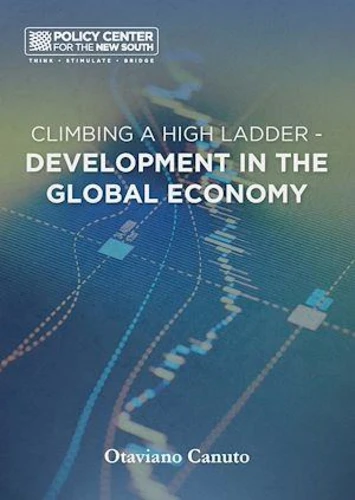
CLIMBING A HIGH LADDER. DEVELOPMENT IN THE GLOBAL ECONOMY
Par : ,Formats :
Disponible dans votre compte client Decitre ou Furet du Nord dès validation de votre commande. Le format PDF est :
- Compatible avec une lecture sur My Vivlio (smartphone, tablette, ordinateur)
- Compatible avec une lecture sur liseuses Vivlio
- Pour les liseuses autres que Vivlio, vous devez utiliser le logiciel Adobe Digital Edition. Non compatible avec la lecture sur les liseuses Kindle, Remarkable et Sony
 , qui est-ce ?
Notre partenaire de plateforme de lecture numérique où vous retrouverez l'ensemble de vos ebooks gratuitement
Pour en savoir plus sur nos ebooks, consultez notre aide en ligne ici
C'est si simple ! Lisez votre ebook avec l'app Vivlio sur votre tablette, mobile ou ordinateur :

- Nombre de pages256
- FormatPDF
- ISBN978-9920-633-10-9
- EAN9789920633109
- Date de parution26/02/2021
- Protection num.Digital Watermarking
- Taille4 Mo
- Infos supplémentairespdf
- ÉditeurPolicy Center for the New Sout
Résumé
Economic development analysis must inevitably rely on a double methodological standpoint. On the one hand, it needs to search for common features, those general attributes that might be present in all national experiences of wealth accumulation, poverty reduction, and moving up the income ladder. On the other, in order to be meaningful, it must reckon with time and space. It must consider that those universal development traits will play out in specific historical and geographical circumstances that will condition their unfolding.
In this book, we try to follow that dual approach. Although each chapter is written in a way that makes it readable as a standalone piece, there is a tentative common thread: we attempt to understand what has meant to climb the income ladder in the context of the global economy prior to and after the 2007-08 global financial crisis. The overall message of our dual analytical-and-historic approach is single: historic and geographical conditions matter, but ultimately the adoption of appropriate country-specific policies and reforms is what makes the difference.
In this book, we try to follow that dual approach. Although each chapter is written in a way that makes it readable as a standalone piece, there is a tentative common thread: we attempt to understand what has meant to climb the income ladder in the context of the global economy prior to and after the 2007-08 global financial crisis. The overall message of our dual analytical-and-historic approach is single: historic and geographical conditions matter, but ultimately the adoption of appropriate country-specific policies and reforms is what makes the difference.
A propos de Policy Center for the New Sout


28,99 €




30,99 €




17,99 €


14,99 €


6,99 €

14,99 €

12,99 €