AI can now write code that looks right. That's the problem. It ships fast. It passes reviews. And then-quietly-it degrades your systems, your standards, and your team's judgment. In The AI Developer's Field Guide, Volume I, Tim O'Brien names the patterns behind this new failure mode-and gives you a way to fight back. This first volume lays the foundation: a shared language for recognizing the anti-patterns of AI-assisted coding before they become standard operating procedure.
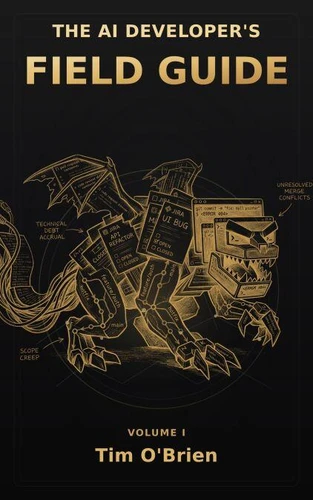
Using an RPG-inspired framework of classes, artifacts, spells, and monsters, the book turns vague frustration into something you can actually talk about-and fix. You'll meet: The Fighter, Wizard, Rogue, and Cleric - developer archetypes shaped by AI under pressure The monsters already creeping into your codebase: Congealing Slop, Probability Pixie, Phantom Intern, Scope Creep Kraken, and more These aren't jokes.
They're patterns you'll recognize immediately-and start seeing everywhere. But this isn't just a taxonomy of failure. It's a field manual. Inside are: Pull request review prompts that catch AI-driven mistakes early Team habits that prevent silent quality collapse Decision frameworks to separate real acceleration from expensive chaos If you're leading a team, reviewing code, or trying to figure out whether AI is helping or quietly wrecking your engineering culture.This book gives you the language-and the leverage-to respond before it's too late.
AI can now write code that looks right. That's the problem. It ships fast. It passes reviews. And then-quietly-it degrades your systems, your standards, and your team's judgment. In The AI Developer's Field Guide, Volume I, Tim O'Brien names the patterns behind this new failure mode-and gives you a way to fight back. This first volume lays the foundation: a shared language for recognizing the anti-patterns of AI-assisted coding before they become standard operating procedure.
Using an RPG-inspired framework of classes, artifacts, spells, and monsters, the book turns vague frustration into something you can actually talk about-and fix. You'll meet: The Fighter, Wizard, Rogue, and Cleric - developer archetypes shaped by AI under pressure The monsters already creeping into your codebase: Congealing Slop, Probability Pixie, Phantom Intern, Scope Creep Kraken, and more These aren't jokes.
They're patterns you'll recognize immediately-and start seeing everywhere. But this isn't just a taxonomy of failure. It's a field manual. Inside are: Pull request review prompts that catch AI-driven mistakes early Team habits that prevent silent quality collapse Decision frameworks to separate real acceleration from expensive chaos If you're leading a team, reviewing code, or trying to figure out whether AI is helping or quietly wrecking your engineering culture.This book gives you the language-and the leverage-to respond before it's too late.


 , qui est-ce ?