SOLDES
Jusqu'à -70% sur une sélection d'articles*

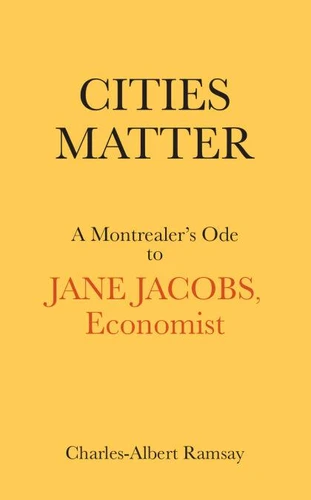
Cities Matter. A Montrealer’s Ode to Jane Jacobs, Economist
Par :Formats :
Disponible dans votre compte client Decitre ou Furet du Nord dès validation de votre commande. Le format ePub est :
- Compatible avec une lecture sur My Vivlio (smartphone, tablette, ordinateur)
- Compatible avec une lecture sur liseuses Vivlio
- Pour les liseuses autres que Vivlio, vous devez utiliser le logiciel Adobe Digital Edition. Non compatible avec la lecture sur les liseuses Kindle, Remarkable et Sony
 , qui est-ce ?
Notre partenaire de plateforme de lecture numérique où vous retrouverez l'ensemble de vos ebooks gratuitement
Pour en savoir plus sur nos ebooks, consultez notre aide en ligne ici
C'est si simple ! Lisez votre ebook avec l'app Vivlio sur votre tablette, mobile ou ordinateur :

- Nombre de pages152
- FormatePub
- ISBN978-1-77186-310-0
- EAN9781771863100
- Date de parution26/09/2022
- Protection num.Digital Watermarking
- Taille2 Mo
- Infos supplémentairesepub
- ÉditeurBaraka Books
Résumé
Why do cities exist? Can't we find better ways of organizing life on earth? With the climate crisis and other environmental issues, are cities part of the problem? Or can they help solve the problems of our time?
Cities Matter answers those questions and more.
Jane Jacobs is known mainly as a thinker of all things urban. That she was. But Ramsay insists that she was also a very important-and much underestimated-economist.
Jacobs innovated particularly on how cities drive the development of nations and international trade. Ramsay has delved into Jacobs' work and extracted the features of her economic thought. Presenting them in a palatable and concise format, he has also brought to bear classical economic geography along with Alfred Marshall's economies of agglomeration. Jane Jacobs was also very pragmatic. Borrowing from her approach, Ramsay proposes real-life exercises for people wishing to compare suburban and urban living conditions, real estate investments, or for businesses doing transport-cost analysis. Some predict that the Covid crisis combined with high tech means urban life is doomed, that the bucolic periphery will triumph over big messy cities. That's not going to happen, says Ramsay. "Humanity still has many problems to fix, " writes Ramsay, "and we need healthy cities to get through it all." Charles-Albert Ramsay is a Montreal economist and teacher with an MA in Economics from the Université de Sherbrooke.
As a journalist, he has reported on new business projects in cities throughout Canada and internationally. Specializing in innovation and urban economics, he has taught economics at Dawson College and Kiuna Institution in Quebec.
Jacobs innovated particularly on how cities drive the development of nations and international trade. Ramsay has delved into Jacobs' work and extracted the features of her economic thought. Presenting them in a palatable and concise format, he has also brought to bear classical economic geography along with Alfred Marshall's economies of agglomeration. Jane Jacobs was also very pragmatic. Borrowing from her approach, Ramsay proposes real-life exercises for people wishing to compare suburban and urban living conditions, real estate investments, or for businesses doing transport-cost analysis. Some predict that the Covid crisis combined with high tech means urban life is doomed, that the bucolic periphery will triumph over big messy cities. That's not going to happen, says Ramsay. "Humanity still has many problems to fix, " writes Ramsay, "and we need healthy cities to get through it all." Charles-Albert Ramsay is a Montreal economist and teacher with an MA in Economics from the Université de Sherbrooke.
As a journalist, he has reported on new business projects in cities throughout Canada and internationally. Specializing in innovation and urban economics, he has taught economics at Dawson College and Kiuna Institution in Quebec.