SOLDES
Jusqu'à -70% sur une sélection d'articles*

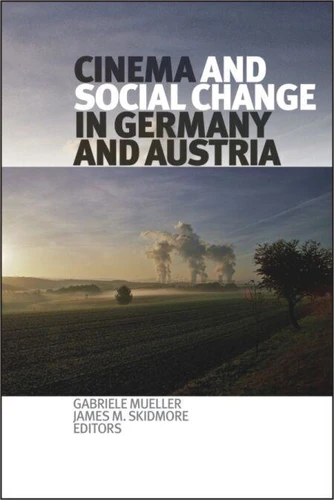
Cinema and Social Change in Germany and Austria
Par : ,Formats :
Disponible dans votre compte client Decitre ou Furet du Nord dès validation de votre commande. Le format ePub est :
- Compatible avec une lecture sur My Vivlio (smartphone, tablette, ordinateur)
- Compatible avec une lecture sur liseuses Vivlio
- Pour les liseuses autres que Vivlio, vous devez utiliser le logiciel Adobe Digital Edition. Non compatible avec la lecture sur les liseuses Kindle, Remarkable et Sony
 , qui est-ce ?
Notre partenaire de plateforme de lecture numérique où vous retrouverez l'ensemble de vos ebooks gratuitement
Pour en savoir plus sur nos ebooks, consultez notre aide en ligne ici
C'est si simple ! Lisez votre ebook avec l'app Vivlio sur votre tablette, mobile ou ordinateur :

- Nombre de pages314
- FormatePub
- ISBN978-1-55458-138-2
- EAN9781554581382
- Date de parution30/08/2012
- Protection num.Digital Watermarking
- Taille4 Mo
- Infos supplémentairesepub
- ÉditeurWilfrid Laurier University Press
Résumé
During the last decade, contemporary German and Austrian cinema has grappled with new social and economic realities. The "cinema of consensus, " a term coined to describe the popular and commercially oriented filmmaking of the 1990s, has given way to a more heterogeneous and critical cinema culture. Making the greatest artistic impact since the 1970s, contemporary cinema is responding to questions of globalization and the effects of societal and economic change on the individual.
This book explores this trend by investigating different thematic and aesthetic strategies and alternative methods of film production and distribution. Functioning both as a product and as an agent of globalizing processes, this new cinema mediates and influences important political and social debates. The contributors illuminate these processes through their analyses of cinema's intervention in discourses on such concepts as "national cinema, " the effects of globalization on social mobility, and the emergence of a "global culture." The essays illustrate the variety and inventiveness of contemporary Austrian and German filmmaking and highlight the complicated interdependencies between global developments and local specificities.
They confirm a broader trend toward a more complex, critical, and formally diverse cinematic scene. This book offers insights into the strategies employed by German and Austrian filmmakers to position themselves between the commercial pressures of the film industry and the desire to mediate or even attempt to affect social change. It will be of interest to scholars in film studies, cultural studies, and European studies.
This book explores this trend by investigating different thematic and aesthetic strategies and alternative methods of film production and distribution. Functioning both as a product and as an agent of globalizing processes, this new cinema mediates and influences important political and social debates. The contributors illuminate these processes through their analyses of cinema's intervention in discourses on such concepts as "national cinema, " the effects of globalization on social mobility, and the emergence of a "global culture." The essays illustrate the variety and inventiveness of contemporary Austrian and German filmmaking and highlight the complicated interdependencies between global developments and local specificities.
They confirm a broader trend toward a more complex, critical, and formally diverse cinematic scene. This book offers insights into the strategies employed by German and Austrian filmmakers to position themselves between the commercial pressures of the film industry and the desire to mediate or even attempt to affect social change. It will be of interest to scholars in film studies, cultural studies, and European studies.