SOLDES
Jusqu'à -70% sur une sélection d'articles*

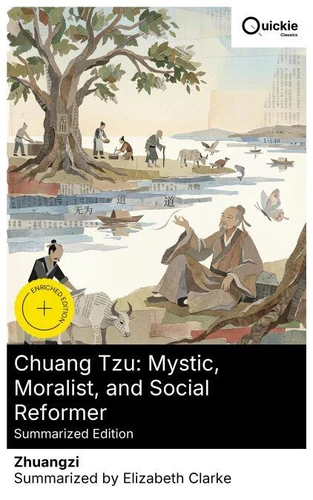
Chuang Tzu: Mystic, Moralist, and Social Reformer (Summarized Edition). Enriched edition. Taoist Teachings and Parables from the Warring States: Philosophical Anecdotes and Eastern Wisdom
Par : , ,Formats :
Disponible dans votre compte client Decitre ou Furet du Nord dès validation de votre commande. Le format ePub est :
- Compatible avec une lecture sur My Vivlio (smartphone, tablette, ordinateur)
- Compatible avec une lecture sur liseuses Vivlio
- Pour les liseuses autres que Vivlio, vous devez utiliser le logiciel Adobe Digital Edition. Non compatible avec la lecture sur les liseuses Kindle, Remarkable et Sony
 , qui est-ce ?
Notre partenaire de plateforme de lecture numérique où vous retrouverez l'ensemble de vos ebooks gratuitement
Pour en savoir plus sur nos ebooks, consultez notre aide en ligne ici
C'est si simple ! Lisez votre ebook avec l'app Vivlio sur votre tablette, mobile ou ordinateur :

- Nombre de pages104
- FormatePub
- ISBN859-65--4788337-1
- EAN8596547883371
- Date de parution10/01/2026
- Protection num.Digital Watermarking
- Taille799 Ko
- Infos supplémentairesepub
- ÉditeurQUICKIE CLASSICS
Résumé
This classic collects parables and dialogues that chart a Daoist art of living amid the Warring States. With playful yet piercing prose, Zhuangzi advances spontaneity (ziran), noncoercive action (wuwei), and the "equalizing of things" (qiwu). Butterfly-dream reverie, Cook Ding's effortless carving, and the Useless Tree lampoon rigid moralism while modeling freedom from fixating names and purposes.
Aphorism, paradox, and self-cancelling rhetoric-distributed across inner, outer, and miscellaneous chapters-place the work beside the Daodejing while distinguishing it by dramatic voices, humor, and skepticism. Attributed to Zhuang Zhou of the fourth century BCE, a recluse from the state of Song, the author reportedly spurned high office in Chu. The era's violent reforms and disputatious schools-Confucian, Mohist, Legalist-offered both foil and stimulus.
Artisans, cripples, and animals serve as his teachers, revealing skill attuned to circumstance rather than rule and shaping his critique of absolutist language and anxious utility. Chuang Tzu: Mystic, Moralist, and Social Reformer deserves a place with the world's philosophical classics. Read it to cultivate supple judgment, to question the tyranny of fixed categories, and to imagine communities formed by humility, play, and responsive skill.
For students of philosophy, literature, religion, and ethics, it offers an enduring pedagogy of freedom amid complexity. Quickie Classics summarizes timeless works with precision, preserving the author's voice and keeping the prose clear, fast, and readable-distilled, never diluted. Enriched Edition extras: Introduction · Synopsis · Historical Context · Author Biography · Brief Analysis · 4 Reflection Q&As · Editorial Footnotes.
Aphorism, paradox, and self-cancelling rhetoric-distributed across inner, outer, and miscellaneous chapters-place the work beside the Daodejing while distinguishing it by dramatic voices, humor, and skepticism. Attributed to Zhuang Zhou of the fourth century BCE, a recluse from the state of Song, the author reportedly spurned high office in Chu. The era's violent reforms and disputatious schools-Confucian, Mohist, Legalist-offered both foil and stimulus.
Artisans, cripples, and animals serve as his teachers, revealing skill attuned to circumstance rather than rule and shaping his critique of absolutist language and anxious utility. Chuang Tzu: Mystic, Moralist, and Social Reformer deserves a place with the world's philosophical classics. Read it to cultivate supple judgment, to question the tyranny of fixed categories, and to imagine communities formed by humility, play, and responsive skill.
For students of philosophy, literature, religion, and ethics, it offers an enduring pedagogy of freedom amid complexity. Quickie Classics summarizes timeless works with precision, preserving the author's voice and keeping the prose clear, fast, and readable-distilled, never diluted. Enriched Edition extras: Introduction · Synopsis · Historical Context · Author Biography · Brief Analysis · 4 Reflection Q&As · Editorial Footnotes.