
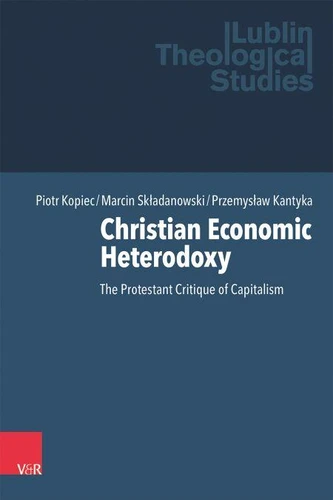



Piotr Kopiec is Professor of Protestant Theology of the John Paul II Catholic University of Lublin, Member of the Council of the National Science Center in Poland, member of the Standing Committee of the European Society for Ecumenical Research "Societas Oecumenica", and president of the Theological Commission of the International Ecumenical Fellowship. Author of 6 scientific books and over a hundred scientific articles.
Marcin Skladanowski is Professor of International Security Studies and director of the Doctoral School of the John Paul II Catholic University of Lublin, member of the Midwestern Political Science Association, TELOS-Paul Piccone Institute, British Association for Slavonic and East European Studies.
Author of numerous books and articles. Przemyslaw Kantyka is Professor of Ecumenism and Protestant Theology of the John Paul II Catholic University of Lublin, member of learned societies, expert of the DPCU for ecumenicl dialogues, and expert of Polish RC Church in TheoBalt network. Author of numerous books and articles. Adam Kubis is Professor at the Faculty of Theology / Institute of Biblical Studies at the John Paul II Catholic University of Lublin. Marek Jagodzinski, Prof.
Dr. hab., is Professor in the Chair of the Orthodox Theology at the Faculty of Theology, The John Paul II Catholic University of Lublin, Poland, and Major Seminary in Radom, Poland. Pawel Makosa is Professor of Theology specializing in religious education, with research focusing on the effectiveness of religious instruction in schools and the challenges posed by youth secularization. Pawel Makosa is Professor of Theology specializing in religious education, with research focusing on the effectiveness of religious instruction in schools and the challenges posed by youth secularization.
Author of numerous books and articles. Przemyslaw Kantyka is Professor of Ecumenism and Protestant Theology of the John Paul II Catholic University of Lublin, member of learned societies, expert of the DPCU for ecumenicl dialogues, and expert of Polish RC Church in TheoBalt network. Author of numerous books and articles. Adam Kubis is Professor at the Faculty of Theology / Institute of Biblical Studies at the John Paul II Catholic University of Lublin. Marek Jagodzinski, Prof.
Dr. hab., is Professor in the Chair of the Orthodox Theology at the Faculty of Theology, The John Paul II Catholic University of Lublin, Poland, and Major Seminary in Radom, Poland. Pawel Makosa is Professor of Theology specializing in religious education, with research focusing on the effectiveness of religious instruction in schools and the challenges posed by youth secularization. Pawel Makosa is Professor of Theology specializing in religious education, with research focusing on the effectiveness of religious instruction in schools and the challenges posed by youth secularization.