SOLDES
Jusqu'à -70% sur une sélection d'articles*

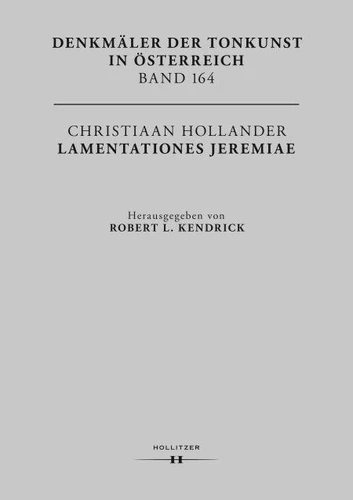
Christiaan Hollander. Lamentationes Jeremiae
Par :Formats :
Disponible dans votre compte client Decitre ou Furet du Nord dès validation de votre commande. Le format PDF est :
- Compatible avec une lecture sur My Vivlio (smartphone, tablette, ordinateur)
- Compatible avec une lecture sur liseuses Vivlio
- Pour les liseuses autres que Vivlio, vous devez utiliser le logiciel Adobe Digital Edition. Non compatible avec la lecture sur les liseuses Kindle, Remarkable et Sony
 , qui est-ce ?
Notre partenaire de plateforme de lecture numérique où vous retrouverez l'ensemble de vos ebooks gratuitement
Pour en savoir plus sur nos ebooks, consultez notre aide en ligne ici
C'est si simple ! Lisez votre ebook avec l'app Vivlio sur votre tablette, mobile ou ordinateur :

- Nombre de pages84
- FormatPDF
- ISBN978-3-99094-073-0
- EAN9783990940730
- Date de parution16/12/2022
- Protection num.Digital Watermarking
- Taille2 Mo
- Infos supplémentairespdf
- ÉditeurHollitzer Wissenschaftsverlag
Résumé
Die neuen Lamentationen (Klagelieder des Jeremia) wurden in der römisch-katholischen Kirche traditionell als Lektionen im Triduum Sacrum der Karwoche gesungen. Christiaan Hollander (um 1510-1568/69) komponierte seinen fünfstimmigen Zyklus für die Liturgie am Hof Erzherzog Ferdinands II., entweder in Prag (1565-66) oder in Innsbruck (1566-1569). Das Werk liegt in der Österreichischen Nationalbibliothek als Handschrift aus dem Jahr 1579 vor, die mit einem Widmungsgedicht von Michael Echamer an Kaiser Rudolf II.
beginnt. Echamer war ein Kollege von Hollander am Tiroler Hof und nahm die Kompositionen wahrscheinlich mit sich, als er 1569 nach Dresden übersiedelte und in sächsische Dienste trat. Die Textauswahl der neun Lektionen ist einzigartig und in dieser Form weder in anderen Lamentationen-Zyklen noch in zeitgenössischen Brevieren zu finden. Das dichte Satzgewebe der Komposition korrespondiert mit Hollanders zeitgenössischem Ruhm als Kontrapunktist. Traditionally, verses from the Lamentations of Jeremiah were sung in Catholic liturgy as nine Matins Lessons during the Triduum Sacrum of Holy Week.
Christiaan Hollander (c. 1510-1568/69) composed his five-voice cycle of such pieces for the chapel of Archduke Ferdinand II of Tyrol either in Prag (1565-66) or Innsbruck (1566-69). The only manuscript source of this work is preserved in the Austrian National Library: a codex from 1579 which opens with a dedicatory poem by Michael Echamer to Emperor Rudolph II. Echamer, Hollander's colleague at the Tyrolese court, probably took the pieces with him when he moved from Tyrol to Saxon court service in Dresden in 1569.
The textual choices of the nine Lessons are unique, and not paralleled in other cycles nor contemporary breviaries. The complex texture of the pieces corresponds to Hollander's comtemporary fame regarding his contrapuntal skill.
beginnt. Echamer war ein Kollege von Hollander am Tiroler Hof und nahm die Kompositionen wahrscheinlich mit sich, als er 1569 nach Dresden übersiedelte und in sächsische Dienste trat. Die Textauswahl der neun Lektionen ist einzigartig und in dieser Form weder in anderen Lamentationen-Zyklen noch in zeitgenössischen Brevieren zu finden. Das dichte Satzgewebe der Komposition korrespondiert mit Hollanders zeitgenössischem Ruhm als Kontrapunktist. Traditionally, verses from the Lamentations of Jeremiah were sung in Catholic liturgy as nine Matins Lessons during the Triduum Sacrum of Holy Week.
Christiaan Hollander (c. 1510-1568/69) composed his five-voice cycle of such pieces for the chapel of Archduke Ferdinand II of Tyrol either in Prag (1565-66) or Innsbruck (1566-69). The only manuscript source of this work is preserved in the Austrian National Library: a codex from 1579 which opens with a dedicatory poem by Michael Echamer to Emperor Rudolph II. Echamer, Hollander's colleague at the Tyrolese court, probably took the pieces with him when he moved from Tyrol to Saxon court service in Dresden in 1569.
The textual choices of the nine Lessons are unique, and not paralleled in other cycles nor contemporary breviaries. The complex texture of the pieces corresponds to Hollander's comtemporary fame regarding his contrapuntal skill.