SOLDES
Jusqu'à -70% sur une sélection d'articles*

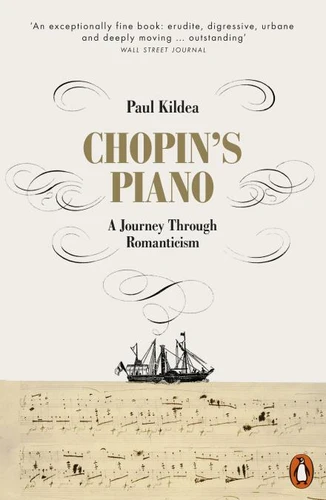
Chopin's Piano. A Journey through Romanticism
Par :Formats :
Disponible dans votre compte client Decitre ou Furet du Nord dès validation de votre commande. Le format ePub protégé est :
- Compatible avec une lecture sur My Vivlio (smartphone, tablette, ordinateur)
- Compatible avec une lecture sur liseuses Vivlio
- Pour les liseuses autres que Vivlio, vous devez utiliser le logiciel Adobe Digital Edition. Non compatible avec la lecture sur les liseuses Kindle, Remarkable et Sony
- Non compatible avec un achat hors France métropolitaine
 , qui est-ce ?
Notre partenaire de plateforme de lecture numérique où vous retrouverez l'ensemble de vos ebooks gratuitement
Pour en savoir plus sur nos ebooks, consultez notre aide en ligne ici
C'est si simple ! Lisez votre ebook avec l'app Vivlio sur votre tablette, mobile ou ordinateur :

- Nombre de pages400
- FormatePub
- ISBN978-0-241-18795-1
- EAN9780241187951
- Date de parution07/06/2018
- Protection num.Adobe DRM
- Infos supplémentairesepub
- ÉditeurPENGUIN
Résumé
'Beguiling ... Limpidly written, effortlessly learned' William Boyd, TLS, Books of the YearIn November 1838 Frédéric Chopin, George Sand and her two children sailed to Majorca to escape the Parisian winter. They settled in an abandoned monastery at Valldemossa in the mountains above Palma, where Chopin finished what would eventually be recognised as one of the great and revolutionary works of musical Romanticism - his 24 Preludes.
There was scarcely a decent piano on the island (these were still early days in the evolution of the modern instrument), so Chopin worked on a small pianino made by a local craftsman, which remained in their monastic cell for seventy years after he and Sand had left. This brilliant and unclassifiable book traces the history of Chopin's 24 Preludes through the instruments on which they were played, the pianists who interpreted them and the traditions they came to represent.
Yet it begins and ends with the Majorcan pianino, which during the Second World War assumed an astonishing cultural potency as it became, for the Nazis, a symbol of the man and music they were determined to appropriate as their own. The unexpected hero of the second part of the book is the great keyboard player and musical thinker Wanda Landowska, who rescued the pianino from Valldemossa in 1913, and who would later become one of the most influential musical figures of the twentieth century.
Kildea shows how her story - a compelling account based for the first time on her private papers - resonates with Chopin's, while simultaneously distilling part of the cultural and political history of Europe and the United States in the central decades of the century. Kildea's beautifully interwoven narratives, part cultural history and part detective story, take us on an unexpected journey through musical Romanticism and allow us to reflect freshly on the changing meaning of music over time.
There was scarcely a decent piano on the island (these were still early days in the evolution of the modern instrument), so Chopin worked on a small pianino made by a local craftsman, which remained in their monastic cell for seventy years after he and Sand had left. This brilliant and unclassifiable book traces the history of Chopin's 24 Preludes through the instruments on which they were played, the pianists who interpreted them and the traditions they came to represent.
Yet it begins and ends with the Majorcan pianino, which during the Second World War assumed an astonishing cultural potency as it became, for the Nazis, a symbol of the man and music they were determined to appropriate as their own. The unexpected hero of the second part of the book is the great keyboard player and musical thinker Wanda Landowska, who rescued the pianino from Valldemossa in 1913, and who would later become one of the most influential musical figures of the twentieth century.
Kildea shows how her story - a compelling account based for the first time on her private papers - resonates with Chopin's, while simultaneously distilling part of the cultural and political history of Europe and the United States in the central decades of the century. Kildea's beautifully interwoven narratives, part cultural history and part detective story, take us on an unexpected journey through musical Romanticism and allow us to reflect freshly on the changing meaning of music over time.