SOLDES
Jusqu'à -70% sur une sélection d'articles*

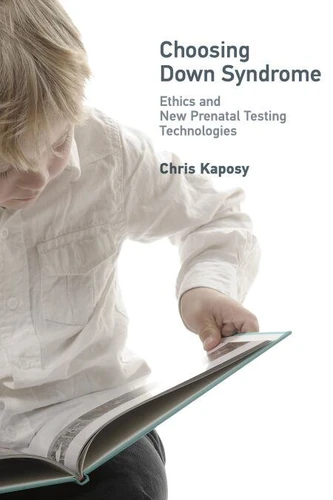
Choosing Down Syndrome. Ethics and New Prenatal Testing Technologies
Par :Formats :
Disponible dans votre compte client Decitre ou Furet du Nord dès validation de votre commande. Le format ePub protégé est :
- Compatible avec une lecture sur My Vivlio (smartphone, tablette, ordinateur)
- Compatible avec une lecture sur liseuses Vivlio
- Pour les liseuses autres que Vivlio, vous devez utiliser le logiciel Adobe Digital Edition. Non compatible avec la lecture sur les liseuses Kindle, Remarkable et Sony
- Non compatible avec un achat hors France métropolitaine
 , qui est-ce ?
Notre partenaire de plateforme de lecture numérique où vous retrouverez l'ensemble de vos ebooks gratuitement
Pour en savoir plus sur nos ebooks, consultez notre aide en ligne ici
C'est si simple ! Lisez votre ebook avec l'app Vivlio sur votre tablette, mobile ou ordinateur :

- Nombre de pages240
- FormatePub
- ISBN978-0-262-34573-6
- EAN9780262345736
- Date de parution06/04/2018
- Protection num.Adobe DRM
- Taille308 Ko
- Infos supplémentairesepub
- ÉditeurThe MIT Press
Résumé
An argument that more people should have children with Down syndrome, written from a pro-choice, disability-positive perspective. The rate at which parents choose to terminate a pregnancy when prenatal tests indicate that the fetus has Down syndrome is between 60 and 90 percent. In Choosing Down Syndrome, Chris Kaposy offers a carefully reasoned ethical argument in favor of choosing to have such a child.
Arguing from a pro-choice, disability-positive perspective, Kaposy makes the case that there is a common social bias against cognitive disability that influences decisions about prenatal testing and terminating pregnancies, and that more people should resist this bias by having children with Down syndrome. Drawing on accounts by parents of children with Down syndrome, and arguing for their objectivity, Kaposy finds that these parents see themselves and their families as having benefitted from having a child with Down syndrome.
To counter those who might characterize these accounts as based on self-deception or expressing adaptive preference, Kaposy cites supporting evidence, including divorce rates and observational studies showing that families including children with Down syndrome typically function well. Himself the father of a child with Down syndrome, Kaposy argues that cognitive disability associated with Down syndrome does not lead to diminished well-being.
He argues further that parental expectations are influenced by neoliberal ideologies that unduly focus on the supposed diminished economic potential of a person with Down syndrome. Kaposy does not advocate restricting access to abortion or prenatal testing for Down syndrome, and he does not argue that it is ethically mandatory in all cases to give birth to a child with Down syndrome. People should be free to make important decisions based on their values.
Kaposy's argument shows that it may be consistent with their values to welcome a child with Down syndrome into the family.
Arguing from a pro-choice, disability-positive perspective, Kaposy makes the case that there is a common social bias against cognitive disability that influences decisions about prenatal testing and terminating pregnancies, and that more people should resist this bias by having children with Down syndrome. Drawing on accounts by parents of children with Down syndrome, and arguing for their objectivity, Kaposy finds that these parents see themselves and their families as having benefitted from having a child with Down syndrome.
To counter those who might characterize these accounts as based on self-deception or expressing adaptive preference, Kaposy cites supporting evidence, including divorce rates and observational studies showing that families including children with Down syndrome typically function well. Himself the father of a child with Down syndrome, Kaposy argues that cognitive disability associated with Down syndrome does not lead to diminished well-being.
He argues further that parental expectations are influenced by neoliberal ideologies that unduly focus on the supposed diminished economic potential of a person with Down syndrome. Kaposy does not advocate restricting access to abortion or prenatal testing for Down syndrome, and he does not argue that it is ethically mandatory in all cases to give birth to a child with Down syndrome. People should be free to make important decisions based on their values.
Kaposy's argument shows that it may be consistent with their values to welcome a child with Down syndrome into the family.