SOLDES
Jusqu'à -70% sur une sélection d'articles*

Nouveauté
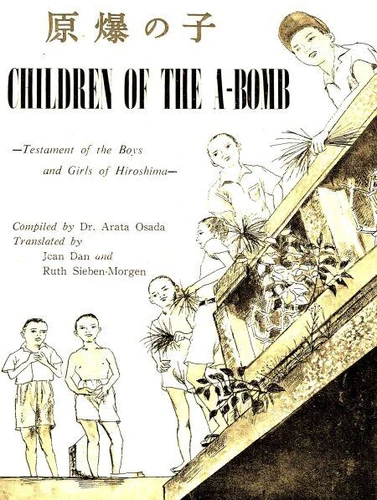
Children of the A-Bomb: Testament of the Boys and Girls of Hiroshima
Par :Formats :
Disponible dans votre compte client Decitre ou Furet du Nord dès validation de votre commande. Le format ePub est :
- Compatible avec une lecture sur My Vivlio (smartphone, tablette, ordinateur)
- Compatible avec une lecture sur liseuses Vivlio
- Pour les liseuses autres que Vivlio, vous devez utiliser le logiciel Adobe Digital Edition. Non compatible avec la lecture sur les liseuses Kindle, Remarkable et Sony
 , qui est-ce ?
Notre partenaire de plateforme de lecture numérique où vous retrouverez l'ensemble de vos ebooks gratuitement
Pour en savoir plus sur nos ebooks, consultez notre aide en ligne ici
C'est si simple ! Lisez votre ebook avec l'app Vivlio sur votre tablette, mobile ou ordinateur :

- FormatePub
- ISBN8902439455
- EAN9798902439455
- Date de parution13/06/2026
- Protection num.Digital Watermarking
- Taille1 Mo
- Infos supplémentairesepub
- ÉditeurRare Treasure Editions
Résumé
''Children of the A-Bomb: Testament of the Boys and Girls of Hiroshima'' by Arata Osada is a historic 1951 compilation of first-person testimonies edited by prominent Japanese education scholar Arata Osada. The book serves as a foundational piece of peace education, documenting the harrowing, raw experiences of young survivors (hibakusha) who lived through the atomic bombing of Hiroshima on August 6, 1945.
Dr.
Arata Osada (1887-1961) was a professor emeritus at Hiroshima University and an educator. He survived the blast himself, which compelled him to dedicate his life to peace activism and co-found Save the Children Japan. Out of more than 2, 000 essays collected six years after the blast, Osada compiled 105 firsthand accounts. The testimonies are chronologically arranged by the grade level of the children at the time of writing-ranging from elementary school to university students.
The writings depict the immediate visual horrors of the explosion, the loss of teachers and family members, and the prolonged trauma of starvation, radiation sickness, and orphanhood. Despite the tragedy, the essays heavily emphasize a desire for global peace and the courage to move forward. The book became an international success, translated into over 13 languages. In 1952, the book was adapted into the highly acclaimed Japanese film Children of Hiroshima (Genbaku no Ko) by director Kaneto Shindo.
Arata Osada (1887-1961) was a professor emeritus at Hiroshima University and an educator. He survived the blast himself, which compelled him to dedicate his life to peace activism and co-found Save the Children Japan. Out of more than 2, 000 essays collected six years after the blast, Osada compiled 105 firsthand accounts. The testimonies are chronologically arranged by the grade level of the children at the time of writing-ranging from elementary school to university students.
The writings depict the immediate visual horrors of the explosion, the loss of teachers and family members, and the prolonged trauma of starvation, radiation sickness, and orphanhood. Despite the tragedy, the essays heavily emphasize a desire for global peace and the courage to move forward. The book became an international success, translated into over 13 languages. In 1952, the book was adapted into the highly acclaimed Japanese film Children of Hiroshima (Genbaku no Ko) by director Kaneto Shindo.