SOLDES
Jusqu'à -70% sur une sélection d'articles*

Nouveauté
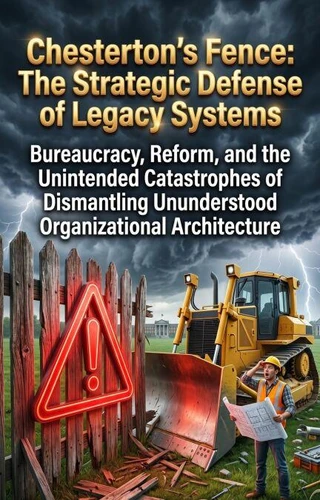
Chesterton's Fence: The Strategic Defense of Legacy Systems. Bureaucracy, Reform, and the Unintended Catastrophes of Dismantling Ununderstood Organizational Architecture
Par :Formats :
Disponible dans votre compte client Decitre ou Furet du Nord dès validation de votre commande. Le format ePub est :
- Compatible avec une lecture sur My Vivlio (smartphone, tablette, ordinateur)
- Compatible avec une lecture sur liseuses Vivlio
- Pour les liseuses autres que Vivlio, vous devez utiliser le logiciel Adobe Digital Edition. Non compatible avec la lecture sur les liseuses Kindle, Remarkable et Sony
 , qui est-ce ?
Notre partenaire de plateforme de lecture numérique où vous retrouverez l'ensemble de vos ebooks gratuitement
Pour en savoir plus sur nos ebooks, consultez notre aide en ligne ici
C'est si simple ! Lisez votre ebook avec l'app Vivlio sur votre tablette, mobile ou ordinateur :

- Nombre de pages180
- FormatePub
- ISBN978-3-565-49449-1
- EAN9783565494491
- Date de parution12/06/2026
- Protection num.pas de protection
- Taille814 Ko
- Infos supplémentairesepub
- ÉditeurEmphaloz Publishing House
Résumé
How often has an ambitious new CEO stepped into a company, aggressively eliminated an "outdated" department or a confusing legacy software system to cut costs, only to watch the entire operational foundation of the business immediately collapse? This arrogant destruction of institutional architecture is exactly what the principle of Chesterton's Fence warns against.
The philosophical rule is brutally simple: If you come across a fence in the middle of nowhere blocking your path, do not tear it down until you can clearly explain exactly why it was built in the first place.
In modern corporate restructuring, complex bureaucratic rules and legacy systems often look like pure inefficiency to outsiders. However, they were usually constructed years ago to solve a specific, catastrophic problem that the new management simply cannot yet see. Removing the friction without understanding its purpose almost guarantees the problem will violently return. This vital management guide explores the psychology of destructive reform.
It analyzes the disaster of blind agile transformations, the true value of institutional memory, and the disciplined strategy of cautious, fully informed corporate renovation. Respect the architecture of the past. Chesterton's Fence teaches leaders that true strategic vision requires understanding the history of a system before attempting to violently disrupt it.
In modern corporate restructuring, complex bureaucratic rules and legacy systems often look like pure inefficiency to outsiders. However, they were usually constructed years ago to solve a specific, catastrophic problem that the new management simply cannot yet see. Removing the friction without understanding its purpose almost guarantees the problem will violently return. This vital management guide explores the psychology of destructive reform.
It analyzes the disaster of blind agile transformations, the true value of institutional memory, and the disciplined strategy of cautious, fully informed corporate renovation. Respect the architecture of the past. Chesterton's Fence teaches leaders that true strategic vision requires understanding the history of a system before attempting to violently disrupt it.