
Serhii Plokhy is the author of Chernobyl: History of a Tragedy, which won the Baillie Gifford Prize and the Pushkin House Book Prize, and the New York Times bestseller The Gates of Europe. His many acclaimed books, including The Russo-Ukrainian War, Nuclear Folly and Atoms and Ashes, have been translated into over a dozen languages. He is Professor of History at Harvard University where he also serves as Director of the Harvard Ukrainian Research Institute.
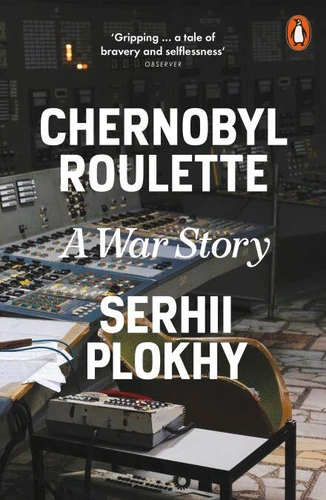
Chernobyl Roulette. A War Story
Par :Formats :
Disponible dans votre compte client Decitre ou Furet du Nord dès validation de votre commande. Le format ePub protégé est :
- Compatible avec une lecture sur My Vivlio (smartphone, tablette, ordinateur)
- Compatible avec une lecture sur liseuses Vivlio
- Pour les liseuses autres que Vivlio, vous devez utiliser le logiciel Adobe Digital Edition. Non compatible avec la lecture sur les liseuses Kindle, Remarkable et Sony
- Non compatible avec un achat hors France métropolitaine
 , qui est-ce ?
Notre partenaire de plateforme de lecture numérique où vous retrouverez l'ensemble de vos ebooks gratuitement
Pour en savoir plus sur nos ebooks, consultez notre aide en ligne ici
C'est si simple ! Lisez votre ebook avec l'app Vivlio sur votre tablette, mobile ou ordinateur :

- Nombre de pages240
- FormatePub
- ISBN978-1-80206-504-6
- EAN9781802065046
- Date de parution03/09/2024
- Protection num.Adobe DRM
- Infos supplémentairesepub
- ÉditeurPenguin
Résumé
'A necessary book - and I can think of no writer better qualified to write it' Cal Flyn What if Chernobyl was just the beginning?The acclaimed winner of the Baillie Gifford Prize returns to Chernobyl to tell the gripping story of thirty-five days of warOn 24 February 2022, the first day of Russia's full-scale invasion of Ukraine, armoured vehicles approached the Chernobyl nuclear power plant in northern Ukraine.
It was the most direct way for them to reach the capital - and an extraordinarily reckless plan after the disaster that had taken place there three decades earlier. Russian occupation of the plant had begun. It would last thirty-five days. Closely reported and narrated from multiple perspectives, this is the story of the Ukrainians who were held hostage and worked shifts for weeks instead of days to spare the world a new nuclear accident.
We meet Valentyn Heiko, the foreman who had also been there for the clean-up of the Chernobyl accident in 1986 and turned sixty during the occupation; plant workers who found a way to celebrate International Women's Day despite all odds; Russian officers who had no knowledge of nuclear reactors; and four stalkers who were caught in the middle and stood in for the overworked cook. Gripping and unforgettable, Chernobyl Roulette sounds the alarm about the dangers of nuclear sites in an unprecedented time, when plant workers are left to fight on their own while the world holds its breath.
In a book that reads like a thriller, Serhii Plokhy tells a remarkable story about human nature, uncertainty and courage.
It was the most direct way for them to reach the capital - and an extraordinarily reckless plan after the disaster that had taken place there three decades earlier. Russian occupation of the plant had begun. It would last thirty-five days. Closely reported and narrated from multiple perspectives, this is the story of the Ukrainians who were held hostage and worked shifts for weeks instead of days to spare the world a new nuclear accident.
We meet Valentyn Heiko, the foreman who had also been there for the clean-up of the Chernobyl accident in 1986 and turned sixty during the occupation; plant workers who found a way to celebrate International Women's Day despite all odds; Russian officers who had no knowledge of nuclear reactors; and four stalkers who were caught in the middle and stood in for the overworked cook. Gripping and unforgettable, Chernobyl Roulette sounds the alarm about the dangers of nuclear sites in an unprecedented time, when plant workers are left to fight on their own while the world holds its breath.
In a book that reads like a thriller, Serhii Plokhy tells a remarkable story about human nature, uncertainty and courage.
A propos de Serhii Plokhy
Aux portes de l’Europe. Histoire de l’Ukraine
Grand Format
32,00 €
30,00 €

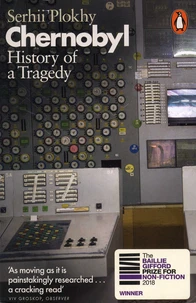
Chernobyl. History of a Tragedy
Grand Format
16,40 €
14,99 €

12,99 €