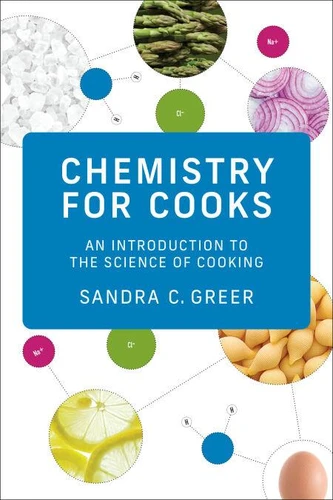
A fun approach to teaching science that uses cooking to demonstrate principles of chemistry for undergraduate students who are not science majors, high school students, culinary students, and home cooks. How does an armload of groceries turn into a culinary masterpiece? In this highly accessible and informative text, Sandra C. Greer takes students into the kitchen to show how chemistry-with a dash of biology and physics-explains what happens when we cook. Chemistry for Cooks provides all the background material necessary for nonscientists to understand essential chemical processes and to see cooking as an enjoyable application of science.
Greer uses a variety of practical examples, including recipes, to instruct readers on the molecular structure of food, the chemical reactions used in cooking to change the nature of food, and the essentials of nutrition and taste. She also offers kitchen hints and exercises based on the material in each chapter, plus do-it-yourself projects to encourage exploration of the chemistry that takes place when we cook food.
Features Perfect for science courses aimed at non-science majors: does not require prior knowledge of chemistry, physics, or biology Equally useful for general readers, home and professional cooks, and culinary students Topics include what matter is made of, how the structure of matter is altered by heat, how we treat food in order to change its microscopic structure, why particular procedures or methods are used in the kitchen, and how to think critically about various cooking methods A reference section at the end of each chapter points readers to resources for further study Additional online resources include a solutions manual, a sample syllabus, and PowerPoint slides of all tables and figures
A fun approach to teaching science that uses cooking to demonstrate principles of chemistry for undergraduate students who are not science majors, high school students, culinary students, and home cooks. How does an armload of groceries turn into a culinary masterpiece? In this highly accessible and informative text, Sandra C. Greer takes students into the kitchen to show how chemistry-with a dash of biology and physics-explains what happens when we cook. Chemistry for Cooks provides all the background material necessary for nonscientists to understand essential chemical processes and to see cooking as an enjoyable application of science.
Greer uses a variety of practical examples, including recipes, to instruct readers on the molecular structure of food, the chemical reactions used in cooking to change the nature of food, and the essentials of nutrition and taste. She also offers kitchen hints and exercises based on the material in each chapter, plus do-it-yourself projects to encourage exploration of the chemistry that takes place when we cook food.
Features Perfect for science courses aimed at non-science majors: does not require prior knowledge of chemistry, physics, or biology Equally useful for general readers, home and professional cooks, and culinary students Topics include what matter is made of, how the structure of matter is altered by heat, how we treat food in order to change its microscopic structure, why particular procedures or methods are used in the kitchen, and how to think critically about various cooking methods A reference section at the end of each chapter points readers to resources for further study Additional online resources include a solutions manual, a sample syllabus, and PowerPoint slides of all tables and figures

 , qui est-ce ?
