
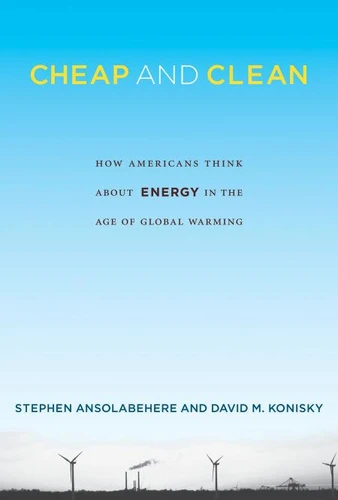
Cheap and Clean. How Americans Think about Energy in the Age of Global Warming
Par : ,Formats :
Disponible dans votre compte client Decitre ou Furet du Nord dès validation de votre commande. Le format ePub protégé est :
- Compatible avec une lecture sur My Vivlio (smartphone, tablette, ordinateur)
- Compatible avec une lecture sur liseuses Vivlio
- Pour les liseuses autres que Vivlio, vous devez utiliser le logiciel Adobe Digital Edition. Non compatible avec la lecture sur les liseuses Kindle, Remarkable et Sony
- Non compatible avec un achat hors France métropolitaine
 , qui est-ce ?
Notre partenaire de plateforme de lecture numérique où vous retrouverez l'ensemble de vos ebooks gratuitement
Pour en savoir plus sur nos ebooks, consultez notre aide en ligne ici
C'est si simple ! Lisez votre ebook avec l'app Vivlio sur votre tablette, mobile ou ordinateur :

- Nombre de pages272
- FormatePub
- ISBN978-0-262-32107-5
- EAN9780262321075
- Date de parution22/08/2014
- Protection num.Adobe DRM
- Taille6 Mo
- Infos supplémentairesepub
- ÉditeurThe MIT Press
Résumé
How Americans make energy choices, why they think locally (not globally), and how this can shape U. S. energy and climate change policy. How do Americans think about energy? Is the debate over fossil fuels highly partisan and ideological? Does public opinion about fossil fuels and alternative energies divide along the fault between red states and blue states? And how much do concerns about climate change weigh on their opinions? In Cheap and Clean, Stephen Ansolabehere and David Konisky show that Americans are more pragmatic than ideological in their opinions about energy alternatives, more unified than divided about their main concerns, and more local than global in their approach to energy.
Drawing on extensive surveys they designed and conducted over the course of a decade (in conjunction with MIT's Energy Initiative), Ansolabehere and Konisky report that beliefs about the costs and environmental harms associated with particular fuels drive public opinions about energy. People approach energy choices as consumers, and what is most important to them is simply that energy be cheap and clean.
Most of us want energy at low economic cost and with little social cost (that is, minimal health risk from pollution). The authors also find that although environmental concerns weigh heavily in people's energy preferences, these concerns are local and not global. Worries about global warming are less pressing to most than worries about their own city's smog and toxic waste. With this in mind, Ansolabehere and Konisky argue for policies that target both local pollutants and carbon emissions (the main source of global warming).
The local and immediate nature of people's energy concerns can be the starting point for a new approach to energy and climate change policy.
Drawing on extensive surveys they designed and conducted over the course of a decade (in conjunction with MIT's Energy Initiative), Ansolabehere and Konisky report that beliefs about the costs and environmental harms associated with particular fuels drive public opinions about energy. People approach energy choices as consumers, and what is most important to them is simply that energy be cheap and clean.
Most of us want energy at low economic cost and with little social cost (that is, minimal health risk from pollution). The authors also find that although environmental concerns weigh heavily in people's energy preferences, these concerns are local and not global. Worries about global warming are less pressing to most than worries about their own city's smog and toxic waste. With this in mind, Ansolabehere and Konisky argue for policies that target both local pollutants and carbon emissions (the main source of global warming).
The local and immediate nature of people's energy concerns can be the starting point for a new approach to energy and climate change policy.