SOLDES
Jusqu'à -70% sur une sélection d'articles*

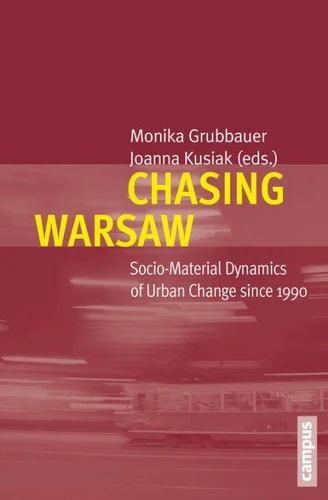
Chasing Warsaw. Socio-Material Dynamics of Urban Change since 1990
Par : , , , ,Formats :
Disponible dans votre compte client Decitre ou Furet du Nord dès validation de votre commande. Le format PDF est :
- Compatible avec une lecture sur My Vivlio (smartphone, tablette, ordinateur)
- Compatible avec une lecture sur liseuses Vivlio
- Pour les liseuses autres que Vivlio, vous devez utiliser le logiciel Adobe Digital Edition. Non compatible avec la lecture sur les liseuses Kindle, Remarkable et Sony
 , qui est-ce ?
Notre partenaire de plateforme de lecture numérique où vous retrouverez l'ensemble de vos ebooks gratuitement
Pour en savoir plus sur nos ebooks, consultez notre aide en ligne ici
C'est si simple ! Lisez votre ebook avec l'app Vivlio sur votre tablette, mobile ou ordinateur :

- Nombre de pages336
- FormatPDF
- ISBN978-3-593-41847-6
- EAN9783593418476
- Date de parution08/10/2012
- Protection num.Digital Watermarking
- Taille28 Mo
- Infos supplémentairespdf
- ÉditeurCampus
Résumé
Der urbane Wandel seit 1990 macht Warschau zu einer der dynamischsten Metropolen Europas. Die AutorInnen nehmen Architektur und Städtebau, soziale Praktiken sowie lokale Wissensbestände und urbane Vorstellungswelten in den Blick. Die Analyse von Veränderungen und Kontinuitäten veranschaulicht die Neuordnung von Stadt und Stadtgesellschaft im Postsozialismus und Neoliberalismus.
Warsaw is an accelerated city, one of the most dynamically developing cities in Europe.
But Warsaw is also a junction of different modes of urbanism: European, Tzarist, modernist, socialist and - in the last two decades - aggressively neoliberal. The book analyzes the interplay of these urban forms under intense urban change after 1990. The interdisciplinary perspective allows the tracking of continuities and breaks, showing how social and material transformations are intertwined, how conflicts emerge and how Warsaw is at the heart of the changing geographies of centrality and marginality in contemporary Poland.
The volume departs from typical narratives of the post-socialist city by showing and discussing how Warsaw's transformation can be read in the terms of global urban change.
But Warsaw is also a junction of different modes of urbanism: European, Tzarist, modernist, socialist and - in the last two decades - aggressively neoliberal. The book analyzes the interplay of these urban forms under intense urban change after 1990. The interdisciplinary perspective allows the tracking of continuities and breaks, showing how social and material transformations are intertwined, how conflicts emerge and how Warsaw is at the heart of the changing geographies of centrality and marginality in contemporary Poland.
The volume departs from typical narratives of the post-socialist city by showing and discussing how Warsaw's transformation can be read in the terms of global urban change.