SOLDES
Jusqu'à -70% sur une sélection d'articles*
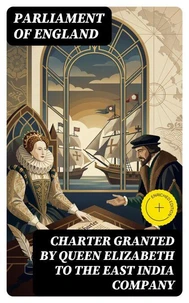
Charter Granted by Queen Elizabeth to the East India Company. Establishing British Trade Power in the East Indies
Par :Formats :
Disponible dans votre compte client Decitre ou Furet du Nord dès validation de votre commande. Le format ePub est :
- Compatible avec une lecture sur My Vivlio (smartphone, tablette, ordinateur)
- Compatible avec une lecture sur liseuses Vivlio
- Pour les liseuses autres que Vivlio, vous devez utiliser le logiciel Adobe Digital Edition. Non compatible avec la lecture sur les liseuses Kindle, Remarkable et Sony
 , qui est-ce ?
Notre partenaire de plateforme de lecture numérique où vous retrouverez l'ensemble de vos ebooks gratuitement
Pour en savoir plus sur nos ebooks, consultez notre aide en ligne ici
C'est si simple ! Lisez votre ebook avec l'app Vivlio sur votre tablette, mobile ou ordinateur :

- Nombre de pages25
- FormatePub
- ISBN406-4-06-645550-7
- EAN4064066455507
- Date de parution11/04/2021
- Protection num.Digital Watermarking
- Taille532 Ko
- Infos supplémentairesepub
- ÉditeurGOOD PRESS
Résumé
The "Charter Granted by Queen Elizabeth to the East India Company" serves as a pivotal document in understanding the genesis of British imperialism and global trade during the Elizabethan era. Written in a formal prose style reflective of 16th-century legal and governmental communication, this charter outlines the privileges granted to the East India Company, including monopolistic trading rights in the East Indies.
Enriched with the political and economic contexts of the time, the text illustrates how royal patronage and commercial ambition intertwined to lay the foundation for future colonial endeavors, showcasing the transition towards a capitalist world system. The Parliament of England, through its legislative authority, offered this charter amid a period marked by rival European powers vying for dominance in trade and exploration.
This context is essential to appreciate the fraught dynamics that shaped the royal decisions behind this grant. The historical importance of the East India Company and its often contentious role in global trade and the subjugation of foreign territories can be traced back to this significant charter, which reflects the ambitions of both the monarchy and emerging capitalist forces. This book is essential reading for scholars and students of historical trade, colonial studies, and early modern politics.
It not only provides direct insight into the legal frameworks governing commercial enterprises of the time but also fosters a deeper understanding of how these dynamics influenced the trajectory of global history.
Enriched with the political and economic contexts of the time, the text illustrates how royal patronage and commercial ambition intertwined to lay the foundation for future colonial endeavors, showcasing the transition towards a capitalist world system. The Parliament of England, through its legislative authority, offered this charter amid a period marked by rival European powers vying for dominance in trade and exploration.
This context is essential to appreciate the fraught dynamics that shaped the royal decisions behind this grant. The historical importance of the East India Company and its often contentious role in global trade and the subjugation of foreign territories can be traced back to this significant charter, which reflects the ambitions of both the monarchy and emerging capitalist forces. This book is essential reading for scholars and students of historical trade, colonial studies, and early modern politics.
It not only provides direct insight into the legal frameworks governing commercial enterprises of the time but also fosters a deeper understanding of how these dynamics influenced the trajectory of global history.